Skip to content
AEGISGreenhouse Systems

Crop Solutions

Greenhouse Crop Solutions

Greenhouse design should start with the crop. Gutter height, growing system, climate capacity, irrigation strategy and labour model all follow from what you intend to grow and which market window you are targeting.

Commercial hydroponic crop production inside a greenhouse
Crop guides
4
Yield data
Per m² per year
Systems covered
Substrate, NFT, gutters, pots
Design basis
Crop-first engineering

Overview

Crop guides

Each guide covers growing requirements, recommended systems, climate management and expected commercial benefits.

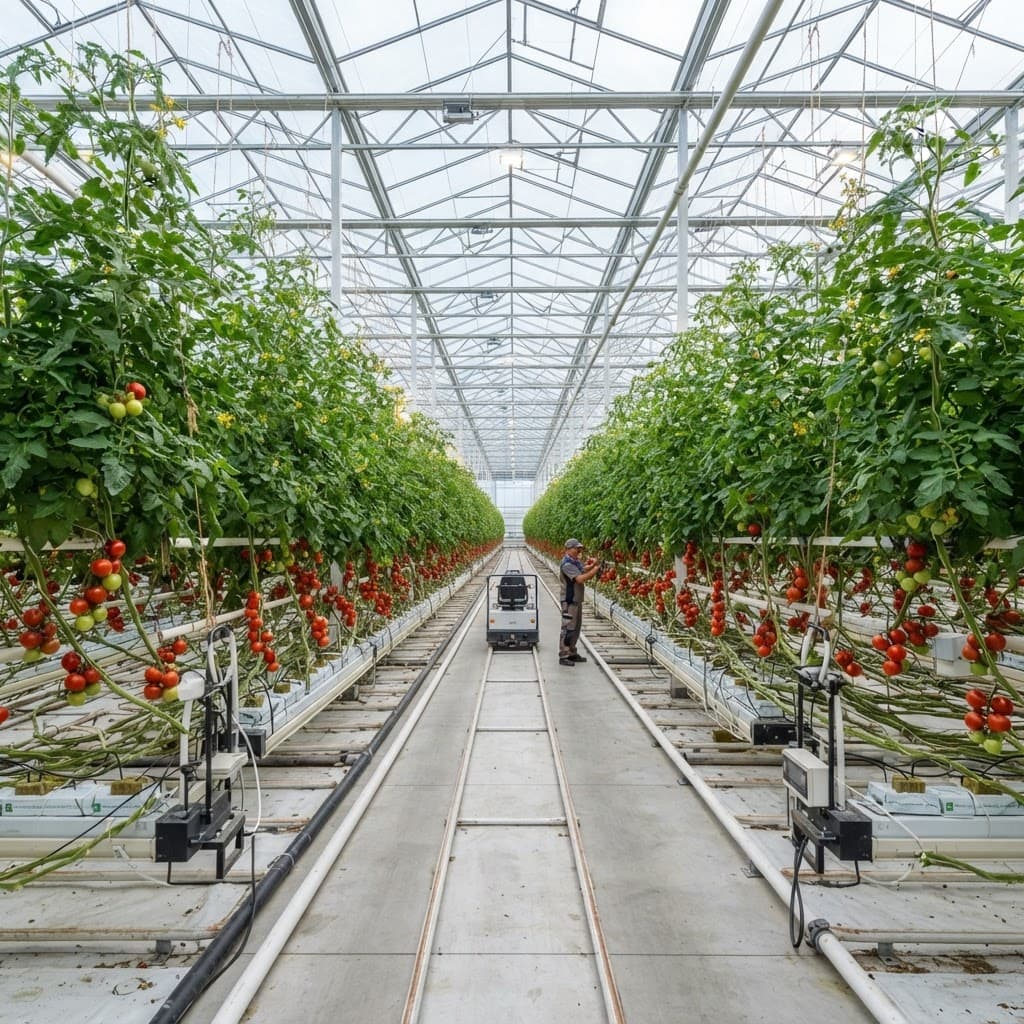
High-wire tomato crop rows inside a commercial greenhouse

Tomato

Greenhouse For Tomato Production

Tomato is the most widely grown protected crop in the world and the benchmark for greenhouse investment returns. A greenhouse for tomato must deliver high light, generous internal height, precise humidity control and a substrate system that supports a nine to eleven month high-wire cycle.

Yield range
40 – 100+ kg/m²/yr
Crop cycle
9 – 11 months
Read the full guide
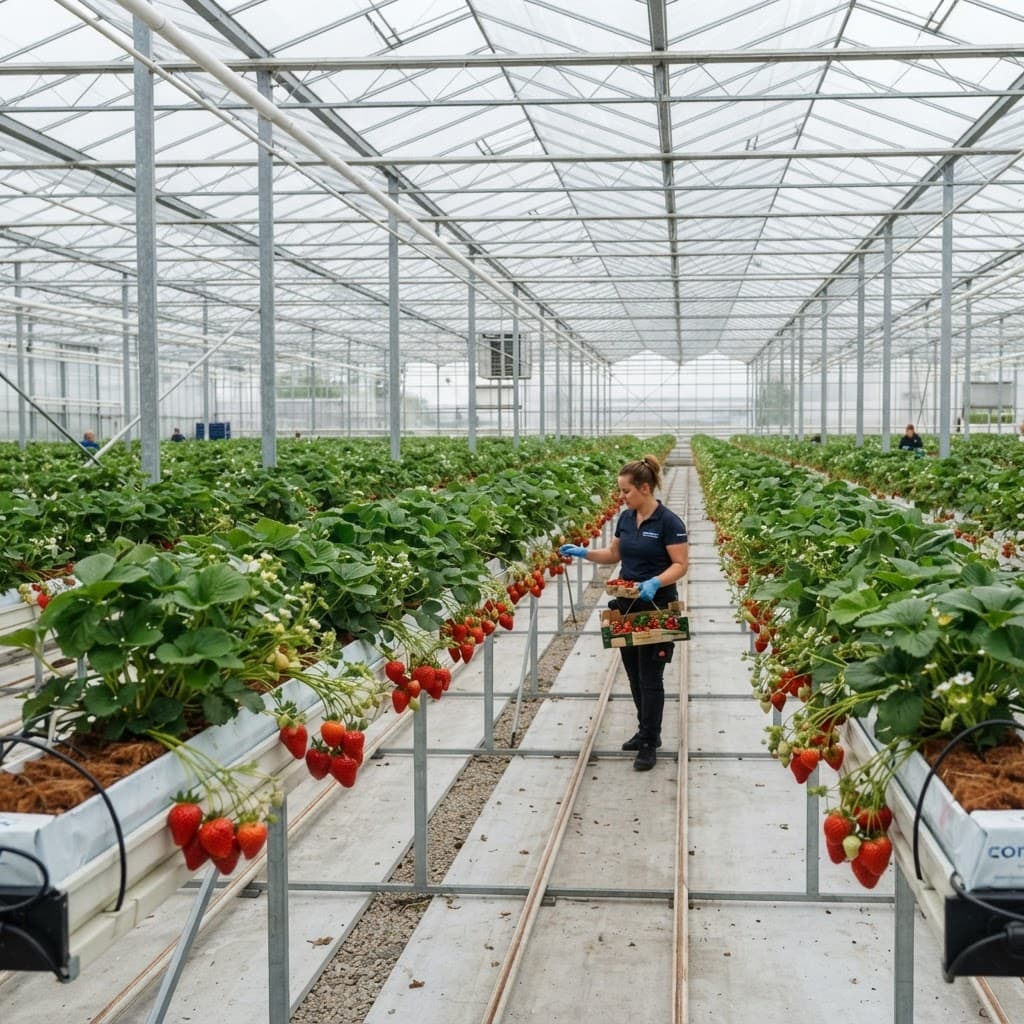
Elevated coco coir gutters with ripe strawberries in a commercial greenhouse

Strawberry

Strawberry Greenhouse Production Systems

Protected strawberry production has moved decisively to elevated gutter systems under glass and film. A strawberry greenhouse extends the season, protects fruit quality and cuts harvest labour cost per kilogram — the three variables that decide profitability in soft fruit.

Yield range
6 – 12 kg/m²/yr
Gutter height
4 – 6 m
Read the full guide
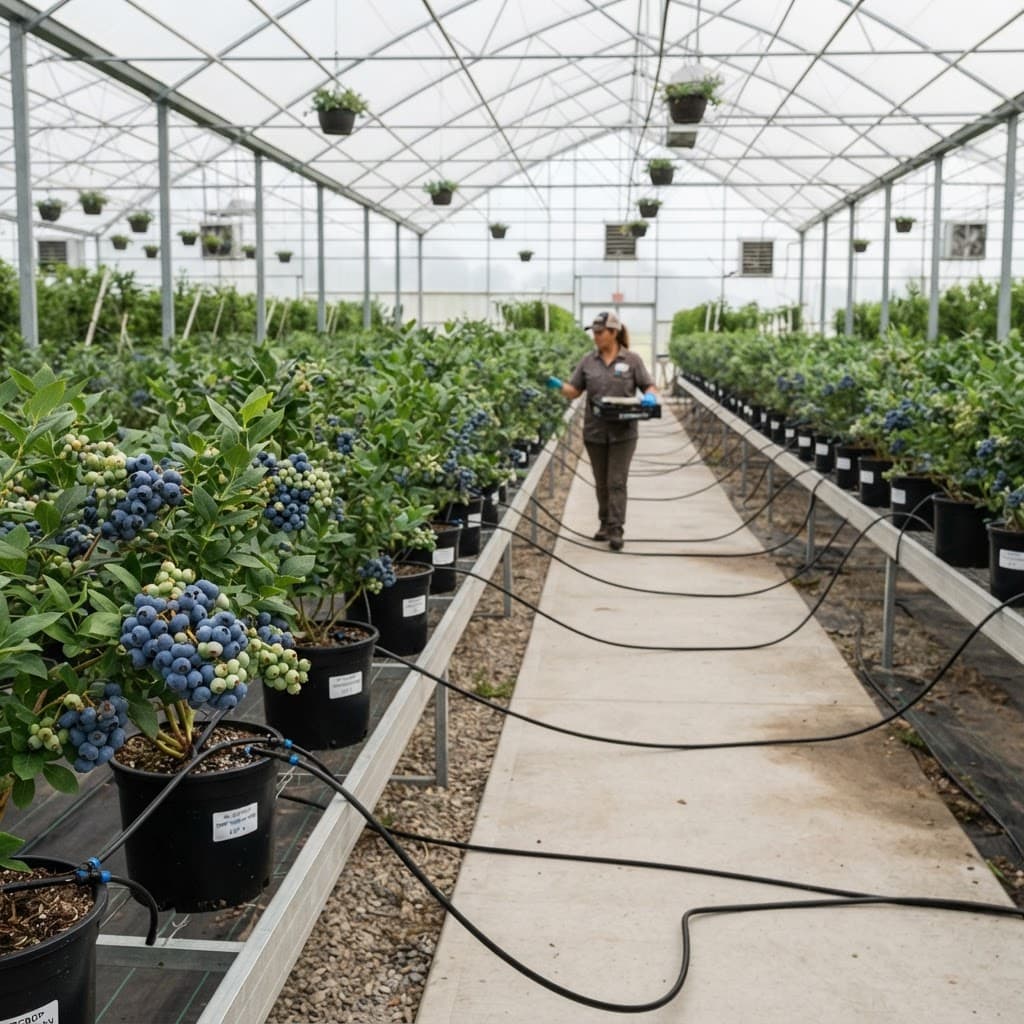
Blueberry bushes in substrate pots with drip irrigation inside a greenhouse

Blueberry

Blueberry Greenhouse Production Systems

Blueberry has become a high-value protected crop because early and late fruit commands premium pricing. A blueberry greenhouse is fundamentally an acidic-substrate irrigation project: water chemistry, pot volume and pH control matter more than structural sophistication.

Yield at maturity
2 – 5 kg/m²/yr
Substrate pH
4.5 – 5.5
Read the full guide
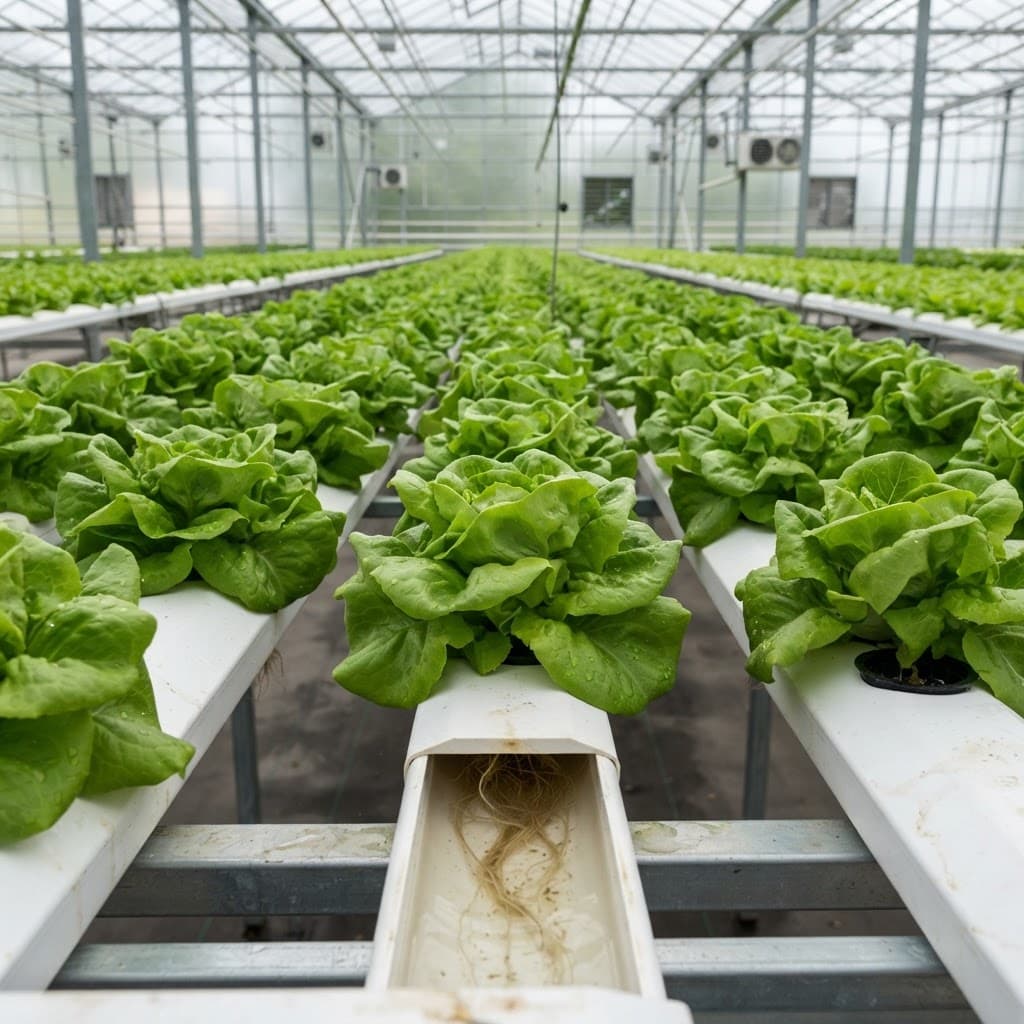
Hydroponic NFT channels filled with mature butterhead lettuce heads

Lettuce & Leafy Greens

Lettuce Greenhouse & Leafy Green Production

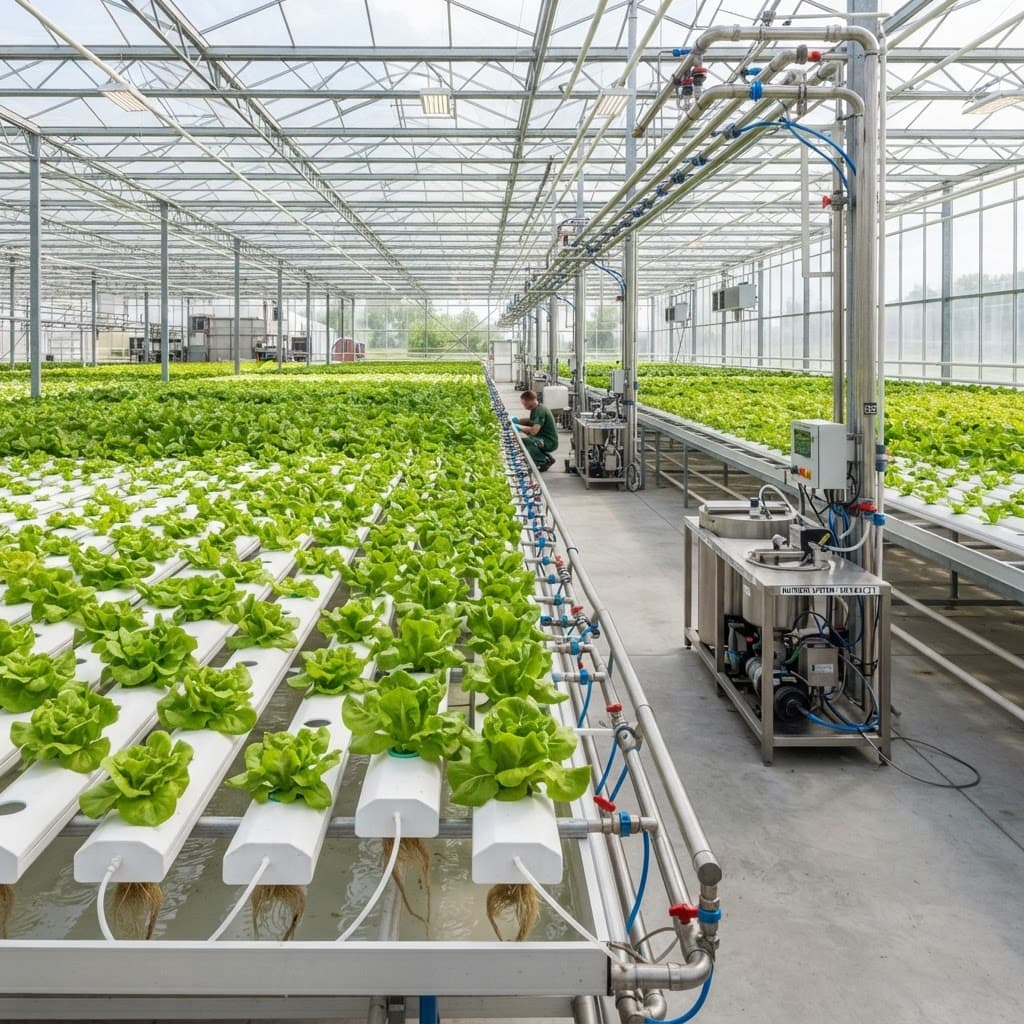
Lettuce and leafy greens are the fastest-cycling greenhouse crops, which makes them the most sensitive to throughput and labour efficiency. A lettuce greenhouse succeeds on cycle discipline, uniform light and reliable root zone temperature rather than on maximum technology.

Cycle length
28 – 45 days
Cycles per year
8 – 12
Read the full guide

01

Crop requirement summary

CropGutter heightTypical systemAnnual yield
Tomato6 – 8 mHigh-wire substrate gutters40 – 100+ kg/m²
Strawberry4 – 6 mElevated coco gutters6 – 12 kg/m²
Blueberry4 – 6 mAcidic substrate pots2 – 5 kg/m²
Lettuce3.5 – 5 mNFT channels or DWC40 – 80 kg/m²

02

Why crop-first design matters

Structure follows canopy

A 4 metre gutter height cannot support high-wire tomato, and an 8 metre glasshouse is wasted capital for lettuce.

Climate capacity follows physiology

Lettuce needs heat avoidance, tomato needs humidity steering, berries need cool nights. Each drives different equipment.

Irrigation follows root zone

Blueberry needs acid dosing, leafy greens need root zone cooling, vine crops need drain-based steering.

Labour follows harvest method

Picking height, row spacing, trolley access and packhouse flow determine operating cost per kilogram.

FAQ

Crop Solutions questions

Direct answers to the questions investors and growers ask most often.

Which greenhouse crop is most profitable?

Profitability depends on local market prices, energy cost and labour rates more than on the crop itself. Tomato offers the highest yield per square metre and reliable contract demand, berries offer the highest price per kilogram in shoulder seasons, and leafy greens offer the fastest capital turnover with the shortest cycles.

Can one greenhouse grow multiple crops?

It is possible but rarely optimal. Different crops need different gutter heights, growing systems and climate strategies. Where a mixed programme is required, we recommend separate compartments with independent climate control rather than compromising a single block.

How do you decide which crop a project should grow?

We work backwards from the market: available sales channels and price levels, local climate and energy cost, water quality, labour availability and the capital ceiling. The crop is chosen where these intersect most favourably, then the greenhouse is engineered for it.

Start Your Greenhouse Project

Send your location, target crop and planned growing area. You will receive a technical response with a suitable greenhouse configuration and an indicative budget range.

Independent greenhouse solution provider · Response within one business day