Skip to content
AEGISGreenhouse Systems

Structure Guide

Commercial Greenhouse Types Compared

Greenhouse type determines capital cost, climate capability, crop options and asset life. This guide compares the four structures used in most commercial projects so the decision is made on engineering criteria rather than sales material.

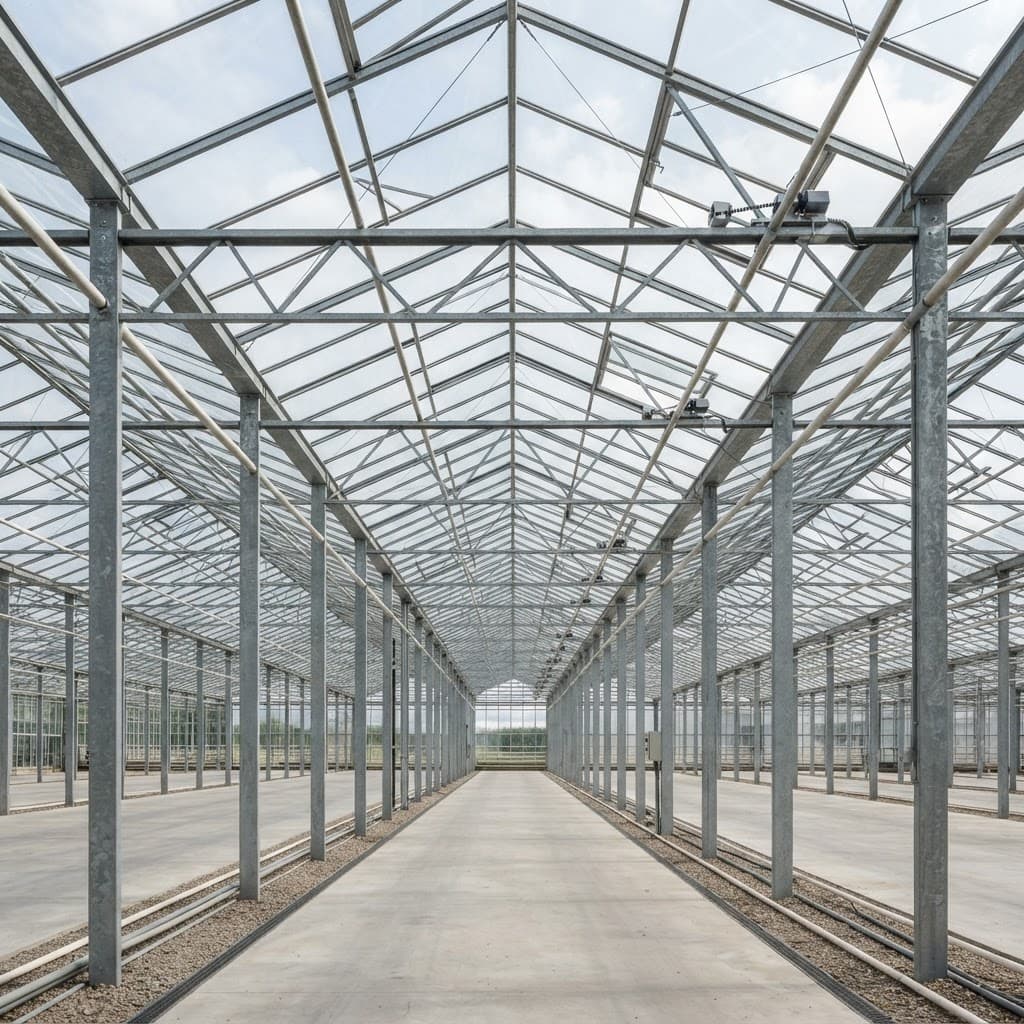
Interior steel structure of a commercial Venlo glass greenhouse
Structures compared
4
CAPEX span
25 – 250+ USD/m²
Design life
5 – 30 years
Selection basis
Climate + crop + capital

Overview

Greenhouse structures

Each page covers advantages, applications, suitable crops and the cost factors that actually move the budget.

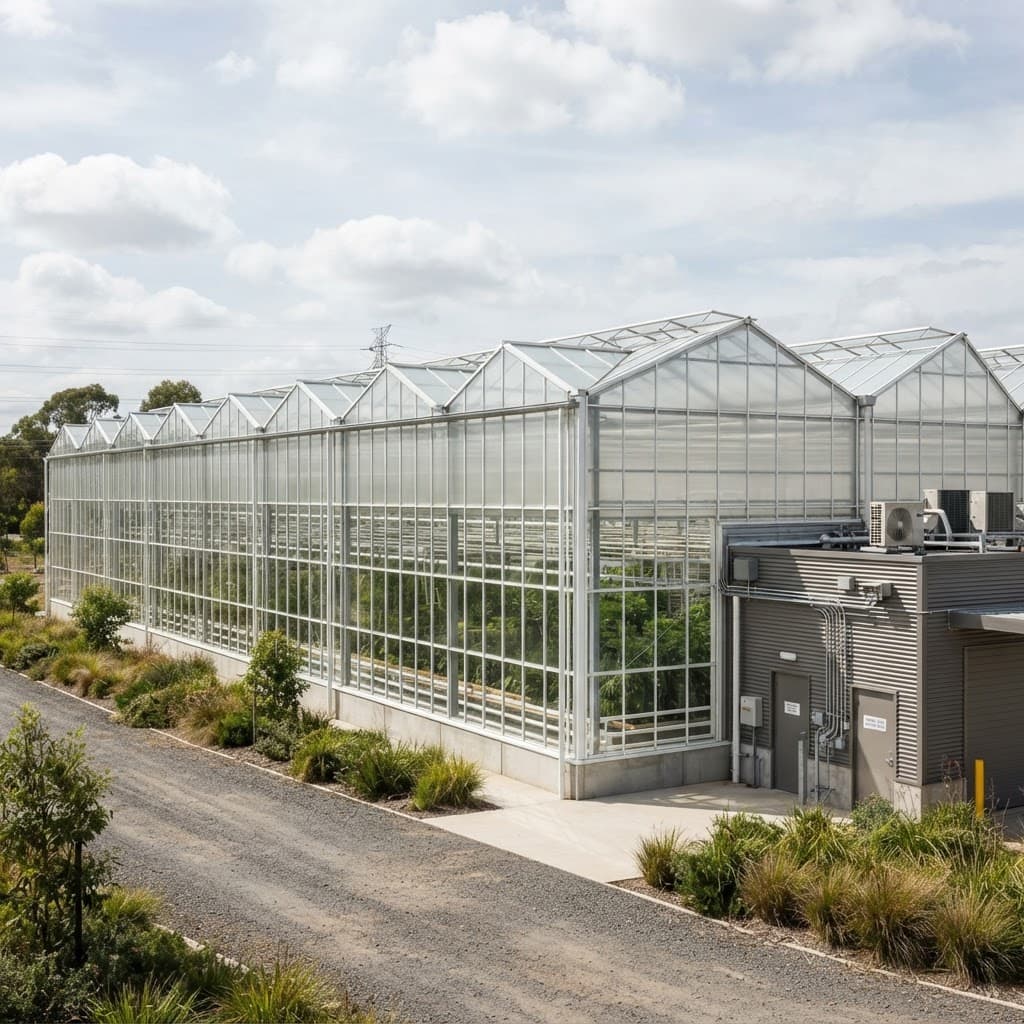
Commercial glass greenhouse roof with diffuse glazing and open ridge vents

Glass Structures

Commercial Glass Greenhouse Systems

A commercial glass greenhouse offers the highest light transmission, the longest service life and the tightest climate control of any greenhouse structure. It is the reference choice for high-value crops where yield per square metre must justify a higher capital cost.

Light transmission
82 – 91%
Design life
20 – 30 years
Read the full guide
Steel truss and gutter structure inside a Venlo glass greenhouse

Venlo Design

Venlo Greenhouse Systems For Commercial Production

The Venlo greenhouse is the international benchmark for high-tech horticulture. Its gutter-connected, narrow-bay roof geometry maximises light while keeping steel weight efficient, which is why most large-scale glass projects worldwide are built on Venlo geometry.

Standard bay widths
4.0 / 8.0 / 9.6 / 12.8 m
Roof pitch
~22 degrees
Read the full guide
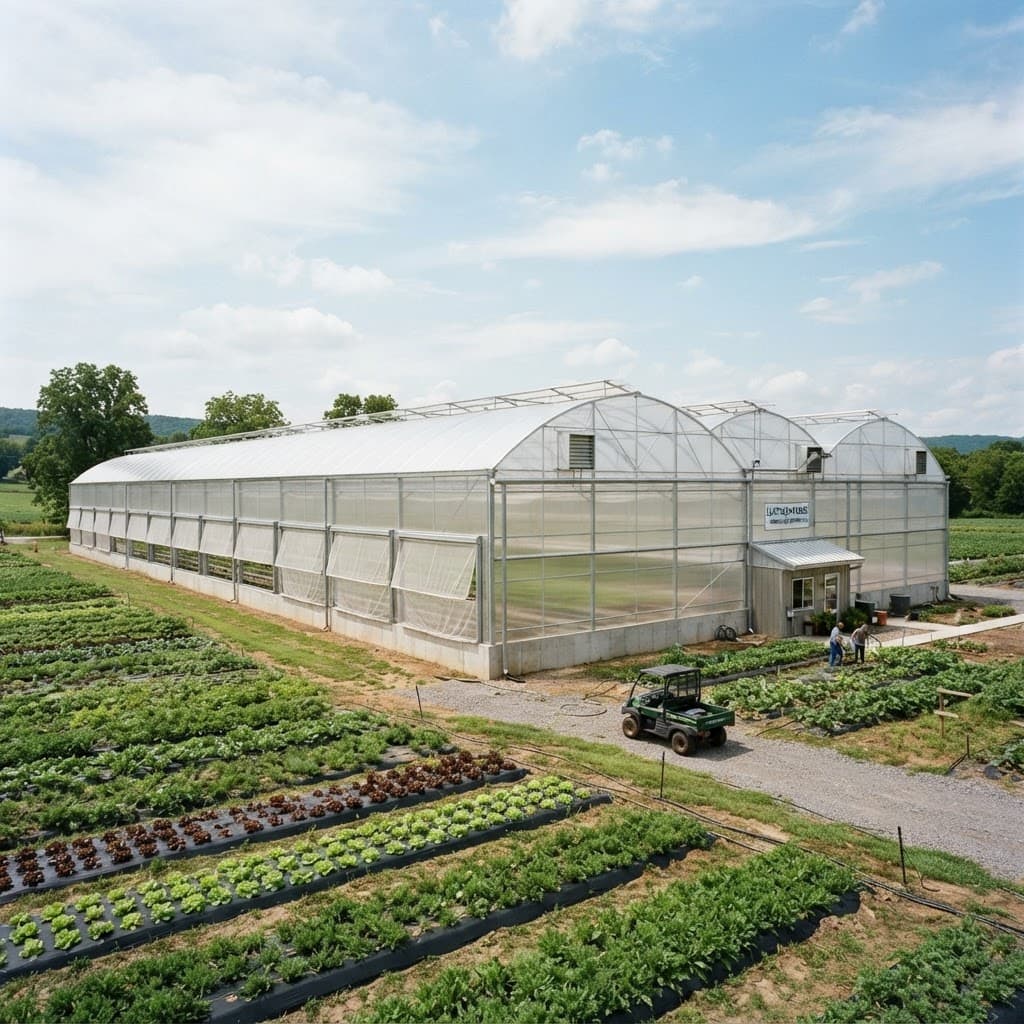
Multi-span film greenhouse with arched roofs and roll-up side ventilation

Multi-Span

Multi-Span Greenhouse Systems

A multi-span greenhouse connects arched or gothic bays under continuous gutters, giving large contiguous growing area at a fraction of glass CAPEX. It is the most capital-efficient way to reach scale in mild and moderate climates.

Span widths
8 / 9.6 / 12 m
Light transmission
80 – 88% (new film)
Read the full guide
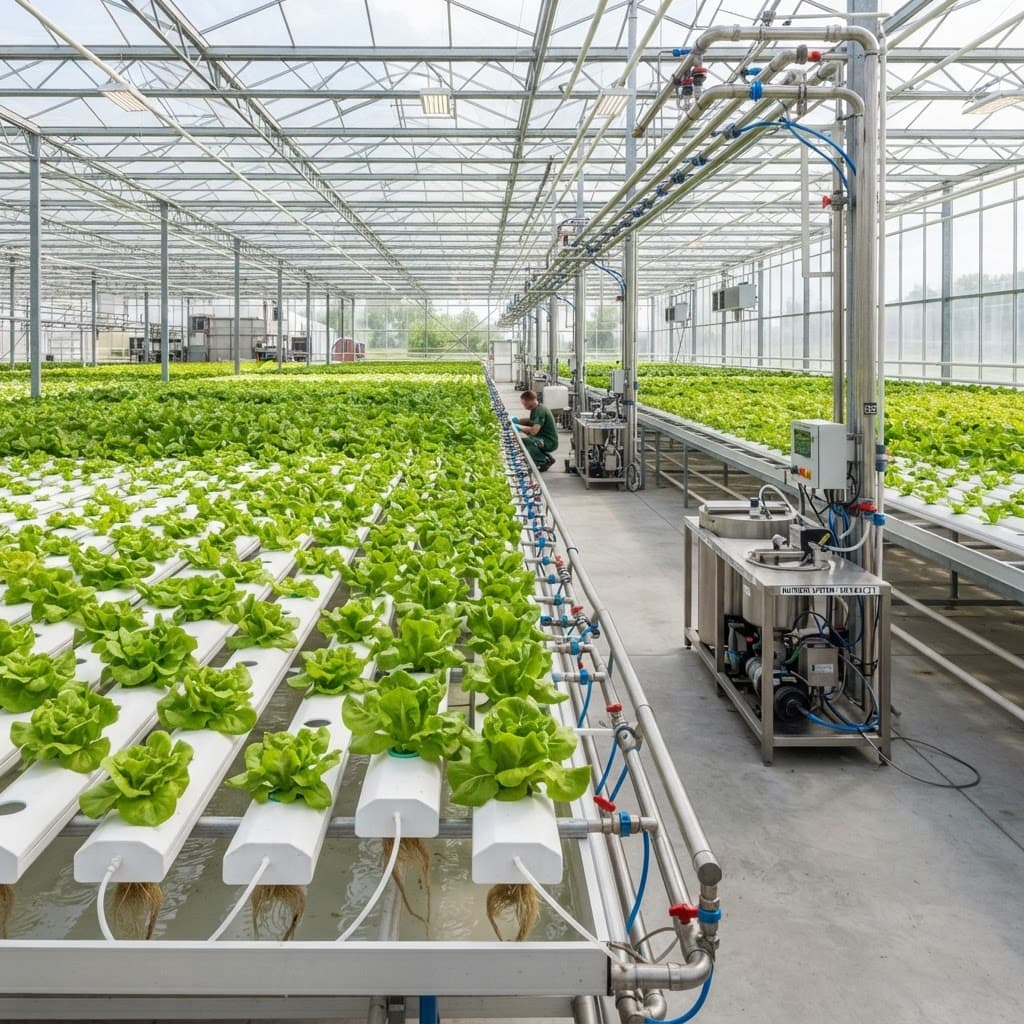
Commercial hydroponic NFT channels with leafy green crops

Hydroponics

Hydroponic Greenhouse Systems

A hydroponic greenhouse system replaces soil with a controlled root environment, giving higher yields, predictable quality and dramatically lower water use. Selecting the right system depends on crop, water quality, labour cost and climate — not on which system is most fashionable.

Water saving
70 – 90% vs open field
Yield uplift
2 – 10× field yields
Read the full guide

01

Quick comparison

TypeLight transmissionClimate controlDesign lifeIndicative CAPEX
Glass greenhouse82 – 91%High to fully automated20 – 30 yrs150 – 250+ USD/m²
Venlo greenhouse82 – 91%High to fully automated20 – 30 yrs160 – 260 USD/m²
Multi-span greenhouse78 – 88%Basic to medium5 – 15 yrs25 – 90 USD/m²
Hydroponic greenhouseDepends on claddingMedium to high10 – 30 yrs110 – 220 USD/m²

02

Inputs required to select a structure

We cannot recommend a greenhouse type without these.

  • Site coordinates and local climate extremes
  • Wind and snow load requirements under the applicable code
  • Target crop, variety strategy and market window
  • Water source, volume and full water analysis
  • Available electrical capacity and fuel options
  • Planned area and expansion horizon
  • Available capital and financing structure
  • Local labour availability and skill level

FAQ

Greenhouse Types questions

Direct answers to the questions investors and growers ask most often.

Which greenhouse type is best for a commercial project?

There is no single best type. Glass and Venlo structures suit high-value crops, cold climates and year-round supply contracts. Multi span film greenhouses suit large areas, mild climates and capital-constrained projects. Hydroponic systems can be installed in either, and are selected by crop, water quality and labour cost.

How long does a commercial greenhouse last?

A hot-dip galvanised steel structure with glass cladding is designed for 20 to 30 years. Multi span structures last 10 to 20 years, but film cladding must be replaced every 3 to 5 years and polycarbonate every 10 to 15 years. Cladding replacement should be modelled as an operating cost.

Can different greenhouse types be combined on one site?

Yes, and it is often the most efficient answer. Many projects use glass for propagation or high-value production and multi span blocks for volume crops, sharing the same reservoir, packhouse, utilities and access infrastructure.

Start Your Greenhouse Project

Send your location, target crop and planned growing area. You will receive a technical response with a suitable greenhouse configuration and an indicative budget range.

Independent greenhouse solution provider · Response within one business day