Cooling capacity sized on coastal humidity data
Pad-and-fan capacity was calculated using local summer wet-bulb data rather than a generic desert assumption, and pad area was increased so the system still delivered usable cooling on humid days.
Greenhouse project consulting, engineering and supply coordination worldwide
projects@aegisgreenhouse.com
United Arab Emirates · Lettuce, herbs and baby leaf
Year-round leafy green supply in a desert climate, where cooling capacity and water efficiency determined the entire design.
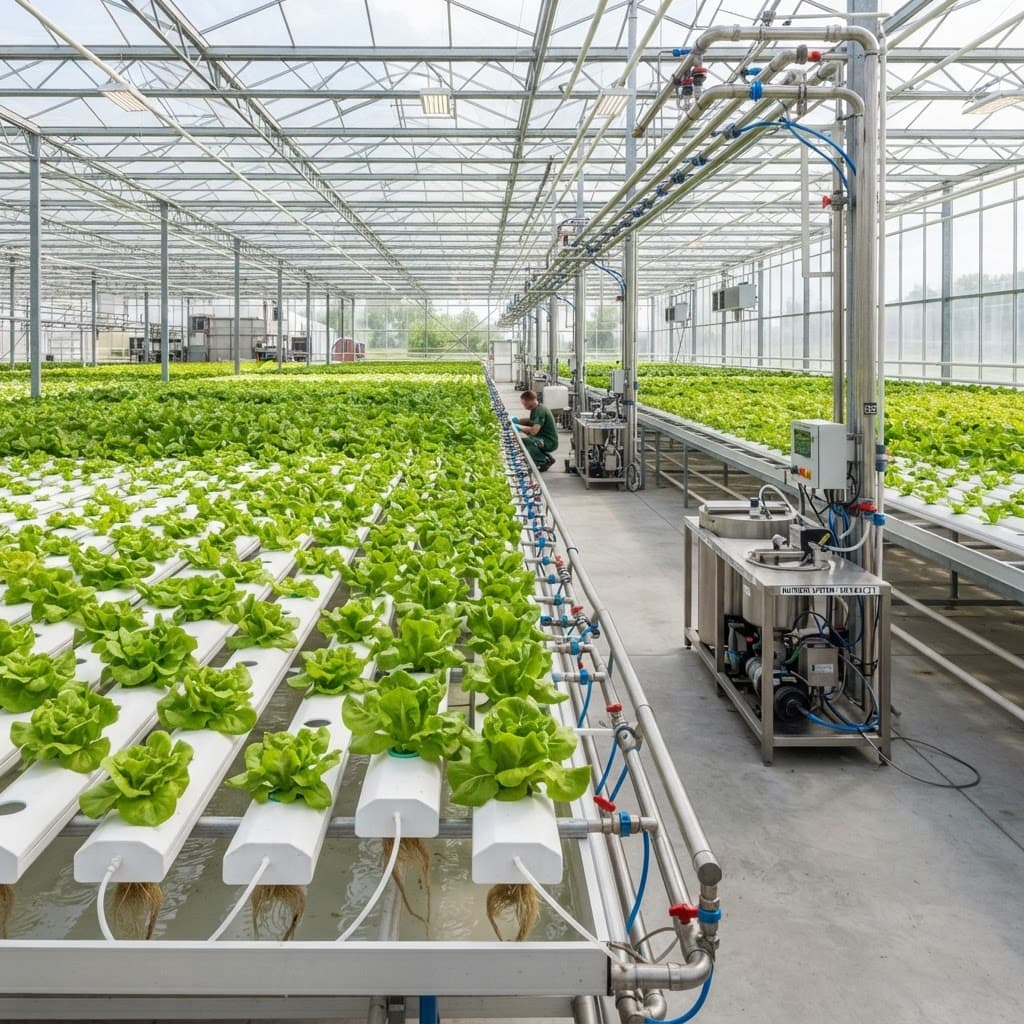
Overview
The commercial and technical starting point for this greenhouse project.
The client supplied hotels and supermarkets that were importing most of their leafy greens by air. The objective was to replace that supply with local production at consistent quality every week of the year, including the summer months when outside temperatures exceed 45 °C and imports are least reliable.
Challenge
Producing lettuce commercially in a Gulf summer is a cooling and water problem before it is a horticultural one.
01
Aegis designed the facility around the summer worst case and then verified that the same configuration remained economic in winter.
Pad-and-fan capacity was calculated using local summer wet-bulb data rather than a generic desert assumption, and pad area was increased so the system still delivered usable cooling on humid days.
Nutrient solution chilling was specified so root zone temperature could be held in range without attempting to cool the full greenhouse volume — the decisive cost saving in the design.
Recirculation with UV disinfection, filtration and a defined partial-discharge rule kept water consumption low while preventing sodium accumulation from reaching the tipburn threshold.
A screened double-door entry, insect mesh on all vents and a positive-pressure corridor were specified together to reduce pest pressure and pesticide dependence in a market sensitive to residues.
Bench layout, harvest aisles and the packing interface were planned as one flow, since labour cost per head is the dominant variable cost in leafy green production.
02
Every selection was tested against the July design condition, not the annual average.
| System | Selection | Reason for selection |
|---|---|---|
| Structure | Multi-span, 9.6 m span, polycarbonate roof | Durable in high UV, lighter capital cost than glass for a leafy green margin |
| Cooling | Pad and fan with oversized pad area | Sized on coastal wet-bulb data so cooling remains effective in humid conditions |
| Root zone | Nutrient solution chiller | Holds root temperature in range without cooling the whole air volume |
| Growing system | NFT channels, closed loop | Low water use per head and fast turnover for short-cycle crops |
| Water treatment | Filtration, UV disinfection, sodium discharge rule | Prevents pathogen spread and sodium accumulation in a recirculating system |
| Screening | Insect mesh, shade screen, screened entry | Reduces pest pressure and residue risk for retail supply |
| Control | Climate and irrigation controller with EC/pH dosing | Coordinates cooling, dosing and recirculation as one strategy |
Outcome
The facility was designed to run through the summer rather than shut down, which is what made the local supply contract possible.
Root zone cooling replaced a proposal to increase whole-greenhouse cooling capacity, reducing both the connected electrical load and the capital cost of the cooling package.
Closed-loop recirculation with a defined sodium discharge rule cut water consumption per harvested head substantially compared with the open-drain system originally quoted.
A commissioning checklist was handed over with the facility so the grower could verify cooling, dosing and disinfection performance independently before the first commercial cycle.
Gallery
Reference images of the greenhouse type, growing system and installation stage used on this project.
NFT channels running on a closed-loop recirculating circuit
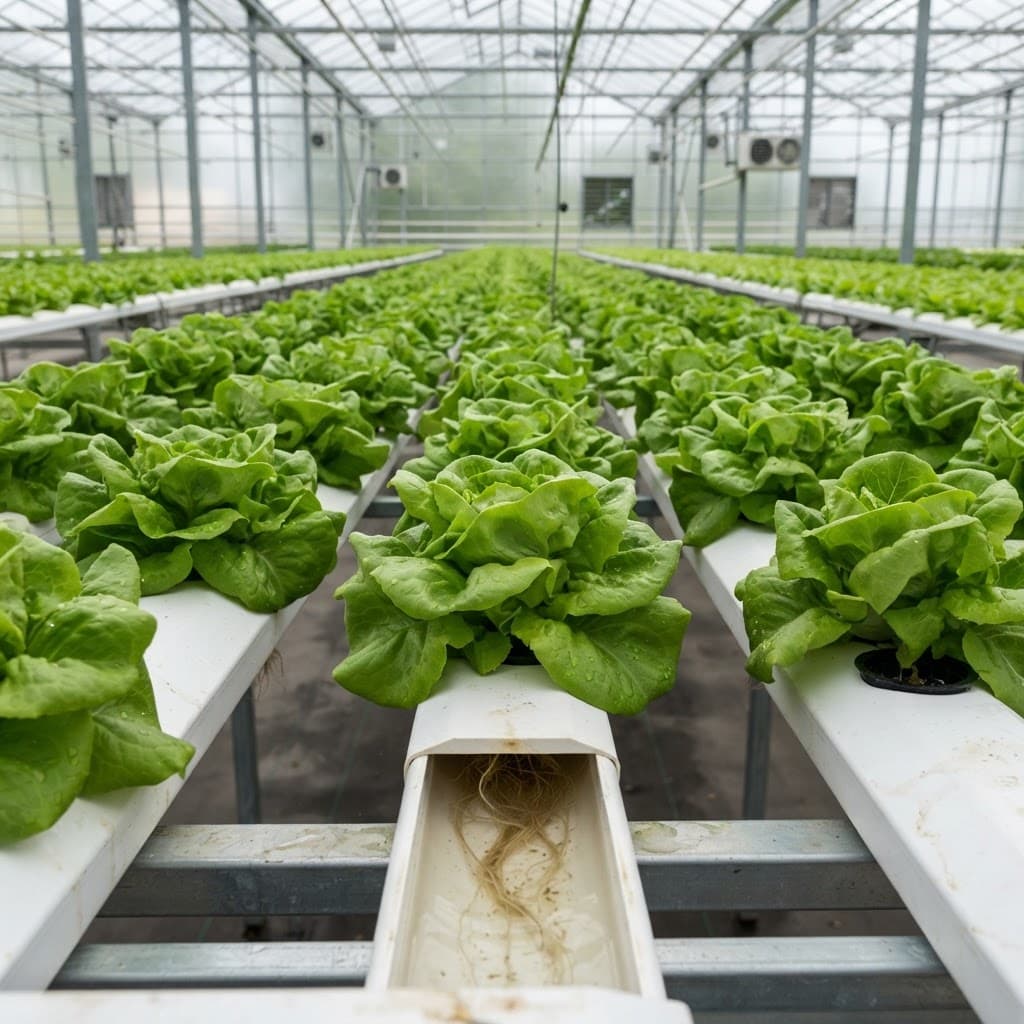
Butterhead lettuce at harvest density
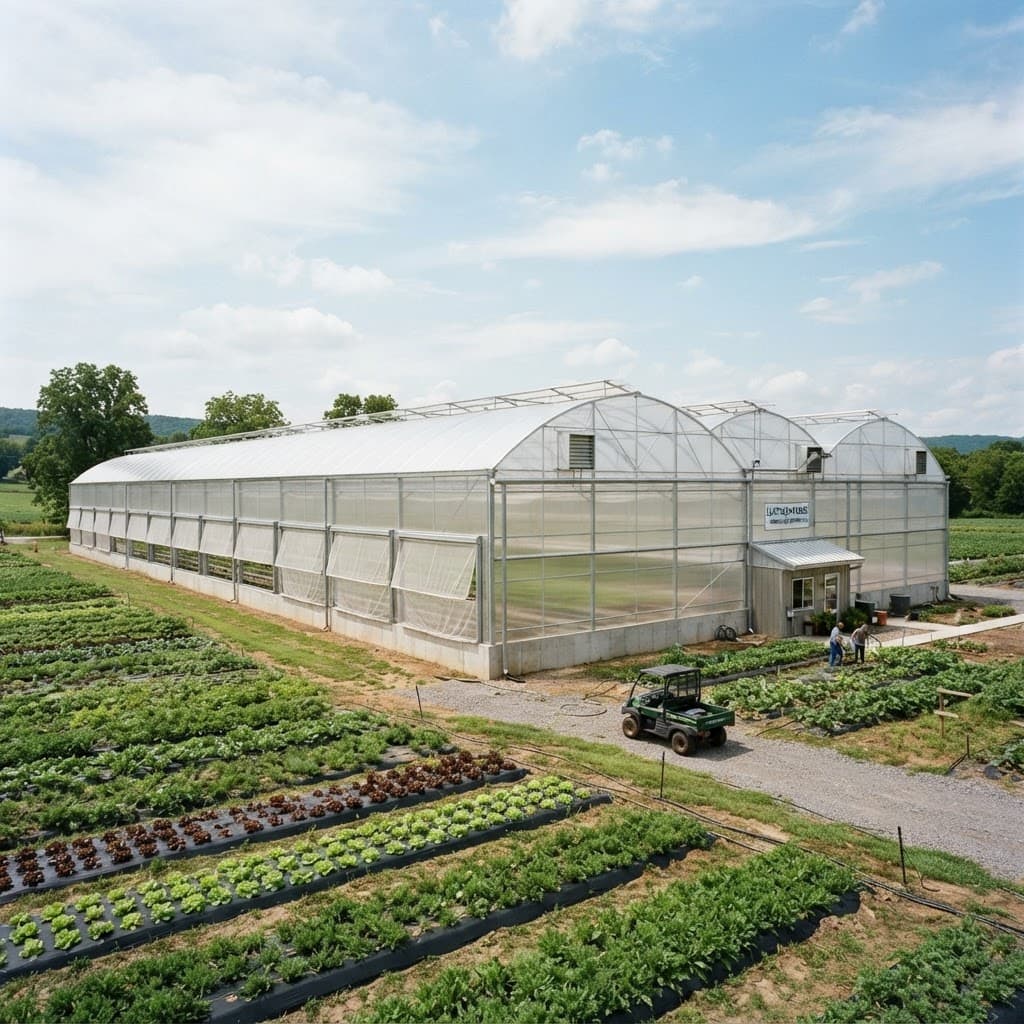
Multi-span structure with insect-screened ventilation
FAQ
Technical and commercial questions raised on this greenhouse solution project.
Yes, but only if the cooling and root zone strategy is designed for the July condition rather than the annual average. In this project, nutrient solution chilling combined with correctly sized evaporative cooling was what kept quality in specification through the hottest weeks.
Leafy greens carry a lower margin per square metre than fruiting crops, so capital cost per square metre matters more. Polycarbonate provided the required light level and UV durability at a lower capital cost, and the crop does not need the high gutter clearance that justifies glass Venlo construction.
Compared with an open-drain system, closed-loop recirculation typically reduces water consumption per harvested unit by a large margin because drain solution is disinfected and returned rather than discharged. The exact saving depends on feed water quality and the discharge rule needed to control sodium.
Continue
Explore the connected technical and commercial topics for this project stage.
Send your country, target crop and planned growing area. We will outline a suitable greenhouse configuration and an indicative budget range based on comparable projects.
Independent greenhouse solution provider · Response within one business day