Elevated gutters at working height
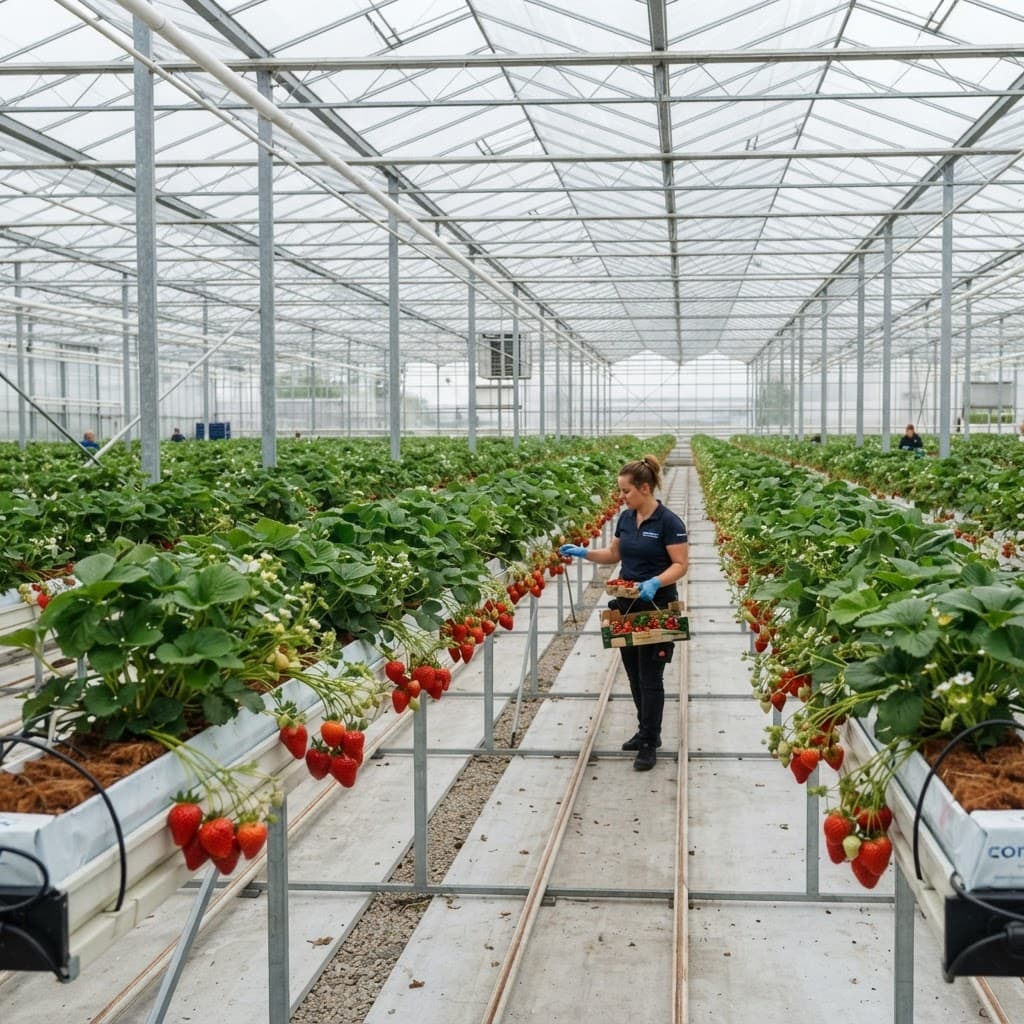
Gutters were set at working height so picking, runner removal and inspection happen without bending. Over a long harvest season this is one of the largest controllable costs in strawberry production.
Greenhouse project consulting, engineering and supply coordination worldwide
projects@aegisgreenhouse.com
Saudi Arabia · Strawberry
A premium fruit project where fruit quality and harvest ergonomics mattered more than raw production volume.
Overview
The commercial and technical starting point for this greenhouse project.
The client targeted the premium retail and hospitality segment, where imported strawberries arrive with limited shelf life and inconsistent grade. The objective was fruit quality and week-on-week continuity at a price point that supported a higher capital cost per square metre, rather than the lowest cost per kilogram.
Challenge
Strawberry is unforgiving: fruit quality responds quickly to root temperature, humidity and pollination conditions.
01
The design treated fruit quality and harvest labour as the two variables that determined project return.
Gutters were set at working height so picking, runner removal and inspection happen without bending. Over a long harvest season this is one of the largest controllable costs in strawberry production.
Substrate volume, gutter material and irrigation frequency were specified together, with cooled irrigation water available at peak, to hold root temperature in the range where fruit quality is retained.
High-pressure fogging was specified with the climate control strategy so humidity could be lifted during the pollination window, protecting bumblebee activity and fruit shape.
A diffuse high-transmission roof with a movable shade screen gave the crop the light it needs in cooler months and protection during peak radiation, under one control strategy.
Screened entries, hive placement and a defined crop hygiene routine were planned into the layout to protect pollinators and reduce botrytis pressure.
02
Specification decisions were justified by fruit grade and picking cost, not by area.
| System | Selection | Reason for selection |
|---|---|---|
| Structure | Glass greenhouse, diffuse high-transmission roof | Premium fruit quality justifies the light performance of glass |
| Growing system | Elevated coco coir gutters at working height | Protects fruit quality and cuts harvest labour cost per kilogram |
| Humidification | High-pressure fogging | Raises humidity during the pollination window in a very dry climate |
| Cooling | Pad and fan with movable shade screen | Controls peak temperature without sacrificing winter light |
| Irrigation | Drip fertigation with cooled water at peak | Holds root zone temperature within the fruit quality range |
| Pollination | Managed bumblebee hives with screened entries | Fruit shape depends directly on pollination consistency |
| Control | Integrated climate, fogging and irrigation control | Humidity, temperature and irrigation must be managed as one strategy |
Outcome
The project was specified to protect grade first, on the basis that premium fruit price is what carries the higher capital cost.
Moving to elevated gutters at working height reduced projected picking hours per kilogram materially compared with the ground-level substrate system in the original concept.
Adding fogging to the climate strategy addressed the pollination risk that would otherwise have shown up as misshapen, downgraded fruit during the driest months.
The specification was deliberately more expensive per square metre than a film alternative; the cost model showed the premium fruit price segment supported it, and that a film structure would not hold grade through the season.
Gallery
Reference images of the greenhouse type, growing system and installation stage used on this project.
Elevated gutters set at working height for repeated harvest
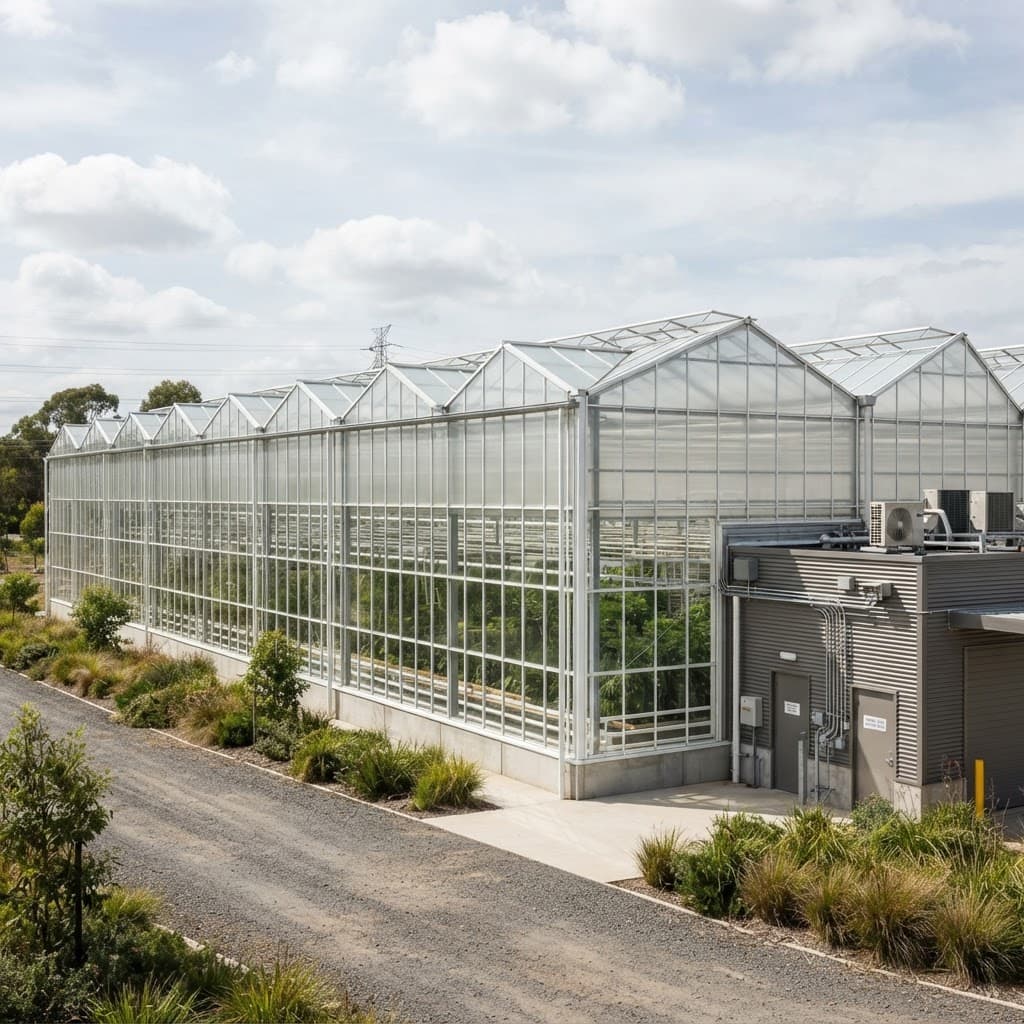
Diffuse high-transmission glass roof with movable shade screen
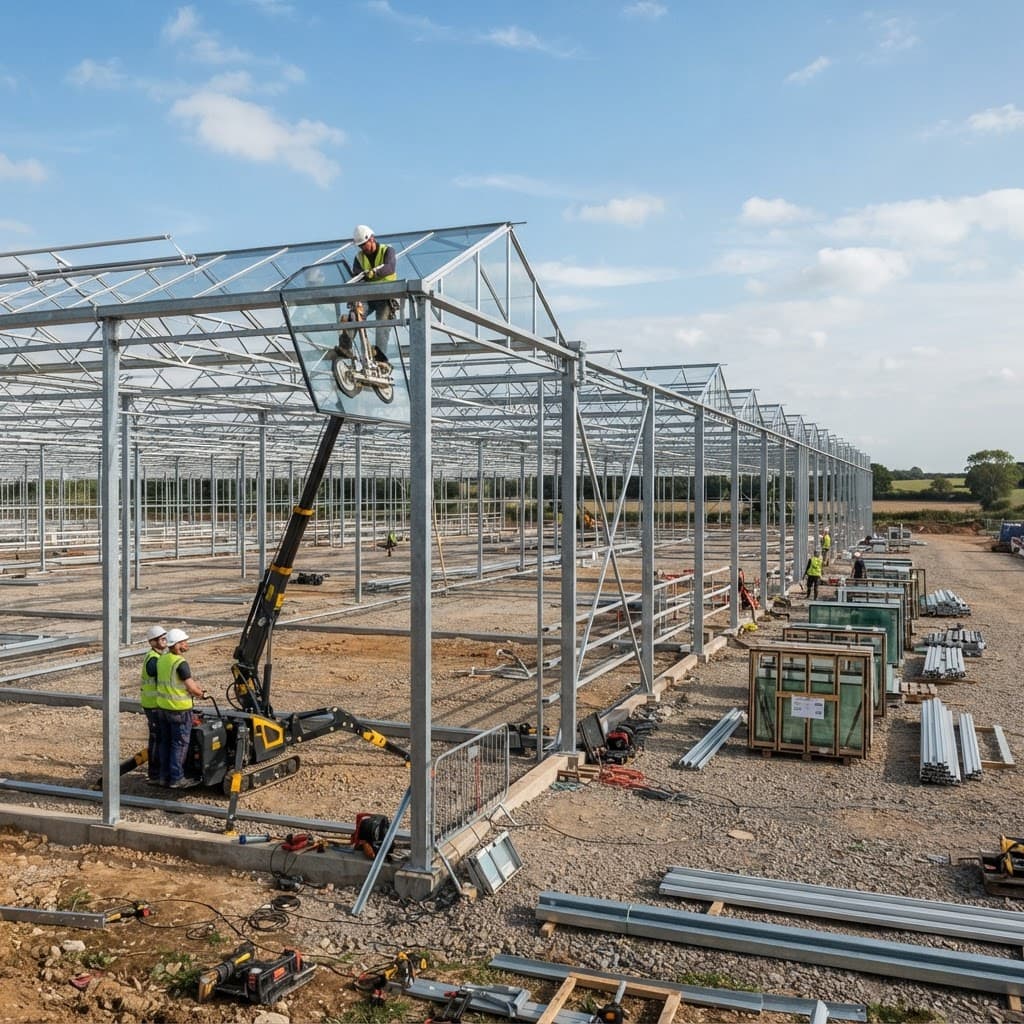
Structure and glazing installation supervised against specification
FAQ
Technical and commercial questions raised on this commercial greenhouse project.
Yes, provided root zone temperature and humidity are controlled. The two failure points are root temperature rising above the fruit quality range and humidity falling low enough to suppress pollination. Both are solvable, but they must be designed for rather than corrected later.
Strawberry is harvested repeatedly across a long season, so picking posture dominates labour cost. Elevated gutters at working height reduce harvest time per kilogram and also improve air movement around the fruit, which lowers botrytis pressure.
Not always. Glass is justified when the target market pays for grade and shelf life, because light quality and climate stability translate directly into fruit quality. For a lower price segment, a well-specified multi-span film structure can be the better commercial decision.
Continue
Explore the connected technical and commercial topics for this project stage.
Send your country, target crop and planned growing area. We will outline a suitable greenhouse configuration and an indicative budget range based on comparable projects.
Independent greenhouse solution provider · Response within one business day