Skip to content
AEGIS Greenhouse Systems

Blog / 16 min read

Large Vegetable Greenhouse Planning: What Commercial Growers Need to Know

A large vegetable greenhouse is no…

By Aegis Project Engineering

Published /Updated

Large Vegetable Greenhouse Planning: What Commercial Growers Need to Know

Overview

Planning a large vegetable greenhouse often starts with the wrong question. Many teams ask how large the structure should be, then move quickly into materials or equipment. In commercial projects, the better starting point is whether the site, crop plan, operating model, and infrastructure can support a controlled production system without creating avoidable complexity later.

That shift in thinking matters. A greenhouse can look feasible on paper yet become difficult in execution if water capacity, electrical service, drainage, workflow, or post-harvest relationships were not clarified early. For commercial teams, the risk usually does not come from one bad component choice. It comes from a mismatch between the production goal and the way the project has been sequenced.

This guide explains how to evaluate a large-scale vegetable greenhouse as an integrated commercial system. It focuses on the planning decisions that affect crop fit, environmental control, labor movement, utilities, scalability, and supplier coordination before procurement begins.

If you are comparing concepts while still defining crop mix, site readiness, or system priorities, review greenhouse type options and Aegis commercial greenhouse project support services alongside this article.

What Is a Large Vegetable Greenhouse?

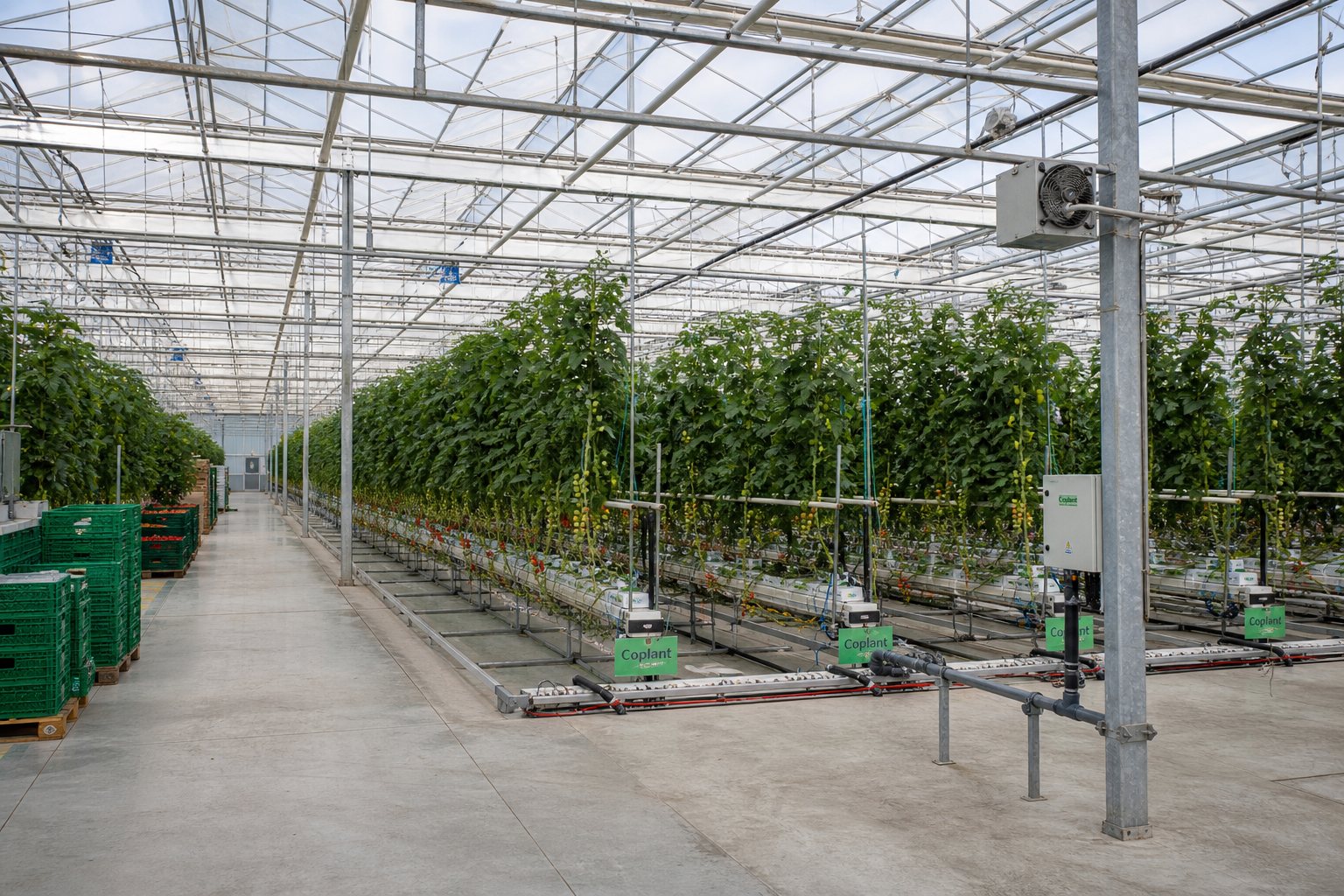
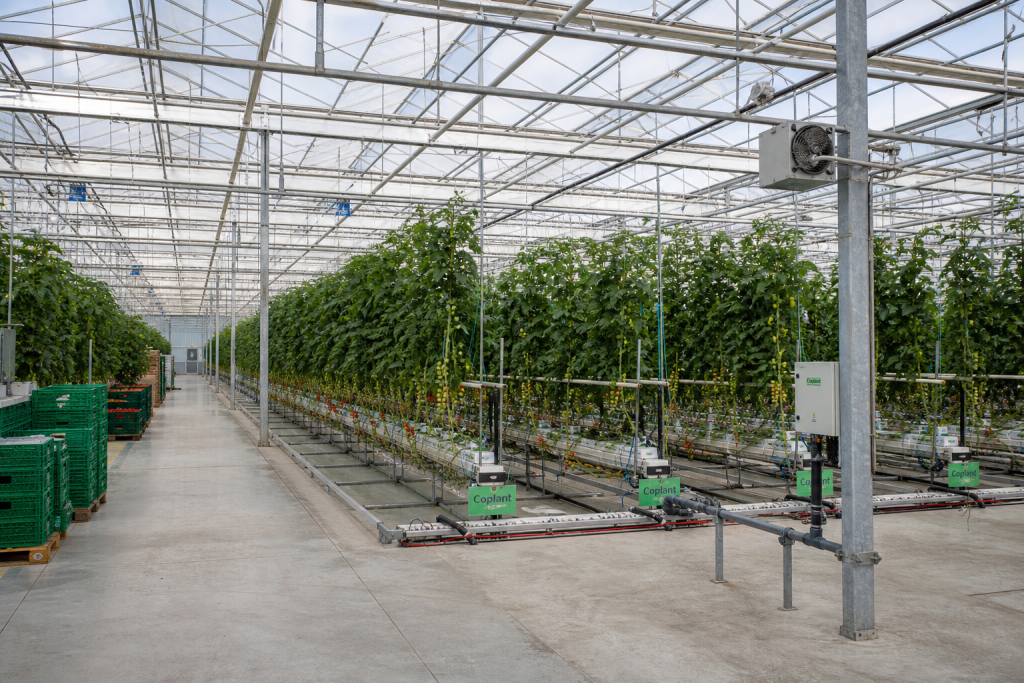
Large commercial vegetable greenhouse interior with trellised crops and organized production layout
A large vegetable greenhouse is best planned as an integrated production system, not just a structure.

There is no universal size threshold that reliably defines a large vegetable greenhouse across all markets, climates, and operating models. A project may be physically moderate in footprint but still function like a complex commercial facility because of its crop demands, utility dependence, environmental-control requirements, and labor intensity.

For practical planning, a large greenhouse is better understood as a project that requires formal coordination across several systems rather than a simple covered growing area. Once crop workflow, fertigation, climate strategy, utilities, and supplier handoffs become interdependent, the project has moved beyond a basic structure decision.

In other words, commercial scale is often defined more by coordination burden than by square footage alone.

  • Environmental systems must work together rather than independently.
  • Water, power, drainage, and access become viability issues, not minor details.
  • Crop handling and labor movement start shaping the layout.
  • Future expansion affects current infrastructure decisions.
  • Supplier choices in one area can limit options in another.

This is why a large greenhouse should be evaluated as an operating platform for protected cultivation, not just as a structure purchase.

When a Vegetable Greenhouse Becomes Commercially Complex

A vegetable greenhouse becomes commercially complex when one design choice begins to influence several others. That is the point where informal planning usually stops being enough.

For example, ventilation is not only a climate-control choice. It can affect structural configuration, screening strategy, humidity management, crop consistency expectations, and control-system integration. Irrigation decisions can also reshape water treatment needs, labor routines, crop layout, and expansion planning. The same pattern applies to heating, cooling, access routes, and post-harvest movement.

Complexity usually appears when the project shifts from “building a greenhouse” to “running a production system.” That transition may happen well before the footprint feels exceptionally large.

Common markers of commercial complexity include:

  • A defined production plan rather than general-purpose growing space
  • Dependence on environmental control for crop stability
  • Integrated irrigation and fertigation planning
  • Structured labor flow for crop care, harvest, sanitation, and movement
  • Utility capacity that must be confirmed before final design
  • Coordination across multiple specialists, vendors, or installation phases

For buyers evaluating a commercial vegetable greenhouse, this distinction is important. The core decision is not whether each subsystem is available. It is whether those systems support the same crop and operating strategy without creating friction later.

Core Planning Factors Before Design Decisions

Before comparing structures or environmental packages, commercial teams should pressure-test the project against a few core planning questions. This stage is where many preventable mistakes can be avoided.

Start with crop and production intent

Crop strategy should come first because it influences layout, labor rhythm, support requirements, irrigation logic, and climate expectations. A greenhouse concept that works for one production model may be inefficient for another, even if both fall under the same broad category of vegetables.

Useful questions include:

  • Is the project centered on one crop or a mixed crop plan?
  • Is the goal seasonal production, extended-season production, or a more controlled year-round model?
  • Will the crop mix likely change as the operation grows?
  • How much operational standardization is needed from the start?

Projects tend to become less efficient when the greenhouse concept is chosen first and the crop strategy is forced into it afterward.

Evaluate site selection and utility readiness early

Water availability, electrical capacity, drainage behavior, road access, and adjacency to packing or storage can determine whether a concept is practical before detailed engineering or supplier engagement even begins.

In many commercial projects, infrastructure is a more serious constraint than the greenhouse envelope itself. A visually attractive structure concept can still be a weak choice if site conditions make reliable operation difficult or costly to coordinate.

As a planning principle supported by controlled environment agriculture research organizations such as the University of Arizona Controlled Environment Agriculture Center, greenhouse production should be approached as a systems decision rather than a structure-only decision. See Controlled Environment Agriculture Center.

Define the climate strategy before comparing packages

Ventilation, heating, cooling, screening, and environmental controls should be judged against local climate conditions, crop sensitivity, and production goals. A system that appears technically strong in isolation may still be the wrong fit if it demands utility capacity, labor attention, or management precision that the project is not structured to support.

The key tradeoff is usually not simple versus advanced. It is control precision versus integration burden. More control can improve consistency, but it also increases the importance of commissioning, maintenance, training, and compatibility across systems.

Plan workflow as part of the greenhouse concept

Labor flow should not be left until late-stage layout review. People, carts, inputs, harvested product, and waste all need movement paths. A design that maximizes plant area on paper can still create bottlenecks in crop care, harvest, sanitation, and transfer to post-harvest areas.

For many operators, workflow mistakes are hard to see in early drawings because the greenhouse looks efficient until daily routines begin. Commercial planning should therefore test how the facility will operate, not only how much crop area it contains.

Build scalability into early planning

Many projects are phased, which means utility routing, access planning, control architecture, and supplier sequencing should be evaluated for both the initial build and likely expansion. Early decisions that solve only the first phase can increase future disruption, rework, or integration difficulty.

If your team is still mapping those dependencies, Aegis maintains additional commercial greenhouse planning resources and can support early-stage evaluation through planning and coordination assistance.
System Decisions for Vegetable Greenhouse Design

Greenhouse design for vegetables is best approached as a fit exercise. The goal is not to identify a universally best structure or equipment package, but to align the physical greenhouse with crop requirements, climate realities, operational workflow, and infrastructure readiness.

Decision area What to evaluate Main tradeoff Risk if decided too early
Structure Crop height, span requirements, climate exposure, expansion pathway Apparent simplicity vs long-term crop and operational fit Locking the project into a form that restricts later system or crop options
Glazing Light goals, insulation priorities, durability, maintenance context Environmental performance vs replacement and operating considerations Over-prioritizing one property without matching crop and region
Ventilation and cooling Heat load, humidity management, airflow path, crop sensitivity Lower complexity vs tighter environmental control Trying to retrofit climate strategy after the envelope is fixed
Heating Climate exposure, continuity goals, operational consistency needs Production stability vs utility and energy demands Underestimating infrastructure implications early
Screening Climate management role, crop protection role, compatibility with controls Additional control capability vs coordination complexity Treating screens as optional accessories instead of part of climate strategy
Irrigation and fertigation Crop method, water quality, control expectations, labor model Higher precision vs management and integration complexity Selecting water systems before crop and layout logic are settled
Production layout Row arrangement, access lanes, service movement, harvest flow Area utilization vs workflow efficiency Creating chronic labor bottlenecks that are difficult to correct

The most important design insight is that these choices should be made in sequence, not as disconnected line items. If the project selects visible technology first, the team often ends up adjusting crop workflow, infrastructure planning, or supplier coordination around decisions that were made too early.

Readers who want a deeper comparison path can review glazing options for commercial vegetable greenhouses, greenhouse climate control requirements, and irrigation and fertigation planning.

Crop Strategy and Layout for Large-Scale Production

Large-scale greenhouse vegetable production changes more than the number of plants under cover. It changes how the greenhouse should be organized, serviced, and managed.

Crop strategy is not only an agronomic decision. It also affects support systems, movement patterns, labor intensity, sanitation routines, and environmental-control priorities. That is why crop planning should be integrated into facility planning from the beginning.

Tomatoes, cucumbers, and peppers are common reference crops in commercial greenhouse discussions, but they should be treated as planning examples rather than interchangeable categories. Different crops can drive different assumptions around trellising, access, service intervals, harvest movement, and climate-management priorities. The right lesson is not that one crop is always better or harder. It is that crop choice reshapes facility logic.

Questions that should guide production layout include:

  • How will crop care teams move through the greenhouse daily?
  • Where will harvested product exit the growing zone?
  • Will harvest, sanitation, and internal logistics compete for the same routes?
  • How close should the greenhouse be to packing or post-harvest functions?
  • Does the layout support future crop changes without major rework?

For related planning content, visit crop-specific greenhouse planning or explore greenhouse systems for tomatoes, cucumbers, and peppers.

Infrastructure Requirements That Can Decide Viability

Infrastructure often determines whether a promising concept is practical. A greenhouse may be well matched to the crop on paper, yet still carry major operational risk if the site cannot reliably support the production model.

Instead of treating utilities as a late checklist, treat them as early viability filters.

Water

Water planning should consider reliability, quality, treatment needs, storage logic, and compatibility with the intended irrigation and fertigation strategy. A water plan that works for a simpler facility may be inadequate once control expectations and crop intensity rise.

Power

Electrical capacity matters for pumps, controls, ventilation, automation, and possible expansion. If power assumptions are weak, later system decisions can become constrained or fragmented.

Drainage

Drainage affects day-to-day operations as well as sanitation and site management. Poor drainage can create recurring friction long before it appears as an obvious engineering failure.

Access and logistics

Road access, delivery patterns, internal traffic, and links to storage or packhouse areas influence labor efficiency and project practicality. A greenhouse that is technically sound but logistically awkward may create hidden operating costs in time, movement, and coordination.

Expansion potential

If phased growth is likely, early infrastructure decisions should not block future development. Utility routing, access planning, and layout reserve areas should be reviewed with expansion in mind.

These issues are often where project risk becomes visible. For commercial teams, the critical question is not only whether the greenhouse can be built, but whether it can be supported consistently at the intended operating level.

Before advancing supplier discussions, it may help to review questions to ask before building a large-scale vegetable greenhouse.

Common Planning Mistakes

Most planning mistakes in a large vegetable greenhouse project come from sequencing errors rather than a lack of technology options.

  1. Choosing the greenhouse concept before confirming crop strategy

    This often creates downstream mismatch in layout, climate approach, irrigation planning, and labor model.

  2. Underestimating utility and drainage constraints

    Site limitations are frequently recognized too late, after major design preferences have already formed.

  3. Designing for maximum area instead of workflow

    Space efficiency can look strong in a drawing while still creating daily inefficiency in crop handling and harvest movement.

  4. Comparing technologies in isolation

    Subsystems should be judged by how they work together, not by specification lists alone.

  5. Assuming climate-control decisions can be optimized later

    Structural and layout decisions often reduce flexibility if climate strategy is delayed.

  6. Ignoring supplier coordination and project sequencing

    Good individual choices can still lead to poor project execution if interfaces, timing, and responsibilities are not aligned.

The recurring pattern behind these mistakes is simple: teams commit to visible solutions before fully defining the operating logic those solutions must support.

For workflow-specific follow-up, see commercial greenhouse layout considerations.

How to Evaluate the Right Commercial Greenhouse Path

If you are in the middle of vegetable greenhouse planning, a feature checklist is not enough. A more reliable approach is to compare options against a decision framework that reflects how commercial projects actually succeed or stall.

Evaluation framework

  1. Crop-production fit

    Does the concept align with the target vegetables, intended production intensity, and future crop flexibility?

  2. Site and utilities readiness

    Can the site support water, power, drainage, logistics, and future growth without forcing major compromise?

  3. Environmental control strategy

    Are ventilation, heating, cooling, and screening appropriate for the local climate and production objective?

  4. Workflow efficiency

    Will people, inputs, harvested product, and waste move through the facility without chronic bottlenecks?

  5. Scalability and sequencing

    Does the initial concept support phased development without creating expensive rework later?

  6. System integration risk

    Is the project being designed as one operating system, or assembled from disconnected purchases?

Several tradeoffs should be made explicit during comparison:

  • Higher control precision can increase management and integration demands.
  • Maximum crop area can reduce service access and labor efficiency.
  • A simpler first phase can improve implementation discipline, but only if expansion has already been planned.
  • A technically strong subsystem can still be the wrong choice if it conflicts with site limits, crop priorities, or project sequencing.

A practical next-step process is to:

  1. Summarize crop goals and production intent on one page.
  2. Audit site conditions for water, power, drainage, access, and adjacency.
  3. Map basic labor, harvest, and product-flow routes.
  4. Clarify whether the project is single-phase or phased.
  5. Only then compare greenhouse and system pathways in detail.

If you are still weighing system pathways, you can also evaluate greenhouse types for vegetable production before moving into supplier-level decisions.

How Aegis Supports Large Vegetable Greenhouse Projects

Aegis Greenhouse Systems works as a Global Commercial Greenhouse Solutions Partner. Aegis supports greenhouse project consulting, solution planning, technology selection support, supplier coordination, and project management assistance.

That role is especially relevant when a project has moved beyond simple structure comparison and into system alignment. Commercial teams often need help organizing crop goals, site constraints, technology choices, and implementation sequencing into one practical project path.

Aegis does not manufacture greenhouse structures or act as a certification body. The value is in helping decision-makers reduce planning uncertainty, compare options more clearly, coordinate suppliers more effectively, and move from concept to execution with fewer avoidable mismatches.

If your team is planning a large vegetable greenhouse and wants a clearer path from concept to coordinated implementation, speak with Aegis about your greenhouse project. You can also review commercial greenhouse project experience and continue with crop planning resources if you are still refining production direction.

FAQ

Frequently asked questions

What defines a large vegetable greenhouse in commercial production?+

In commercial planning, a large vegetable greenhouse is more usefully defined by coordination complexity than by a fixed size threshold. Once utilities, climate systems, crop workflow, irrigation, and supplier coordination become tightly linked, the project usually requires formal planning.

What crops are commonly considered in a commercial vegetable greenhouse?+

Tomatoes, cucumbers, and peppers are common examples, but the right crop depends on market goals, climate conditions, infrastructure, labor model, and the level of environmental control the operation can support.

What should be included in vegetable greenhouse planning before construction begins?+

Commercial planning should cover crop goals, site conditions, water and power review, drainage, climate strategy, irrigation and fertigation concept, production layout, workflow, access logistics, expansion planning, and supplier sequencing.

How does greenhouse design differ by vegetable crop?+

Different crops can change support assumptions, layout priorities, irrigation logic, harvest flow, and climate-management needs. That is why crop planning should guide the greenhouse concept rather than be added after major design choices are already made.

What infrastructure is needed for large-scale greenhouse vegetable production?+

Typical requirements include reliable water, adequate power, workable drainage, road access, internal logistics planning, and practical links to post-harvest or storage functions. These factors often influence viability as much as the greenhouse structure itself.

How do growers choose the right commercial greenhouse for vegetables?+

The strongest approach is to compare options against crop fit, site readiness, environmental-control strategy, workflow efficiency, scalability, and system integration risk rather than relying on a simple component checklist.

What are the most common planning mistakes in a large greenhouse project?+

Common mistakes include choosing the structure before clarifying crop strategy, overlooking utilities and drainage, prioritizing area over workflow, comparing systems in isolation, and delaying supplier coordination until too late in the process.

Start Your Greenhouse Project With Aegis

Send your location, available area, target crop and budget range. You will receive a structured first assessment with technology direction and an indicative investment range.