Skip to content
AEGIS Greenhouse Systems

Resources

Greenhouse Investment & Cost Resources

Research for greenhouse investors: commercial greenhouse cost benchmarks, investment planning guides and technology comparisons from Aegis Greenhouse Systems.

All resources

Browse every published greenhouse resource in one archive view without leaving this page.

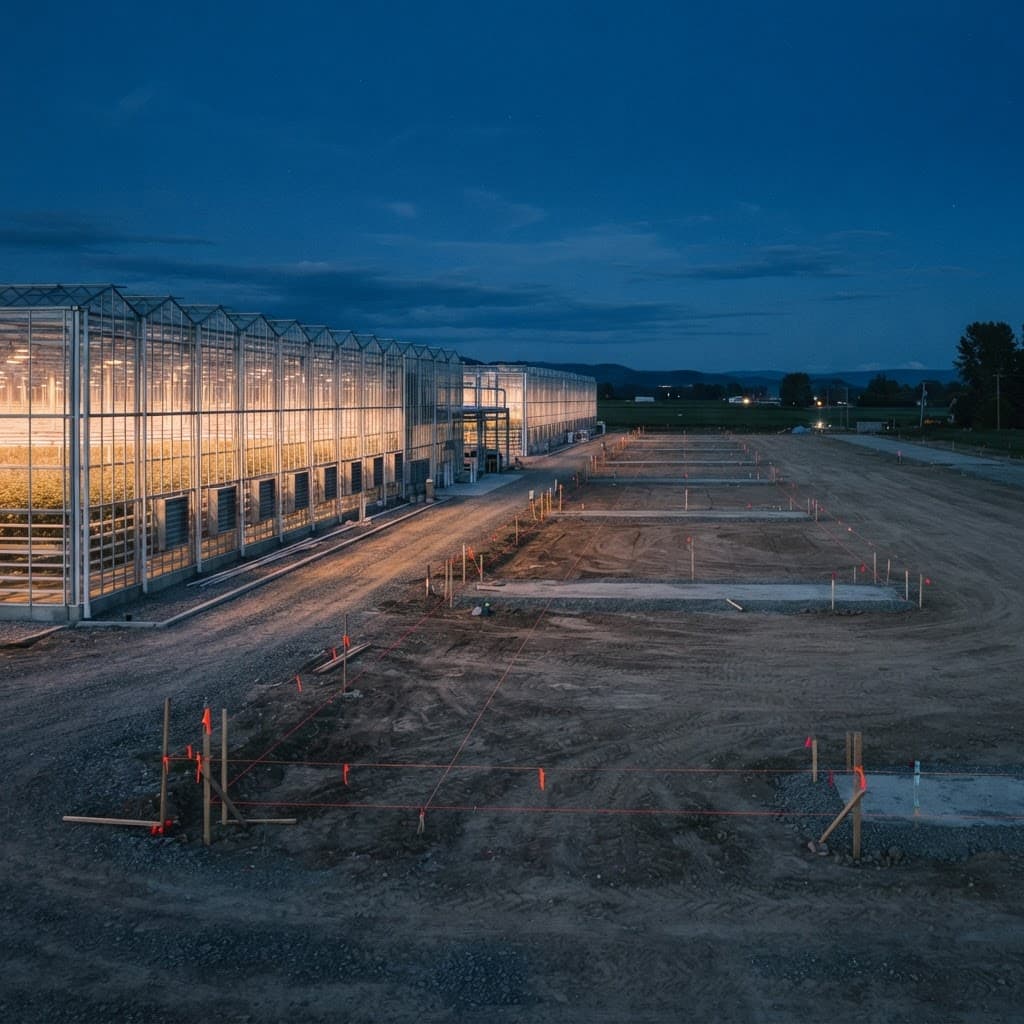
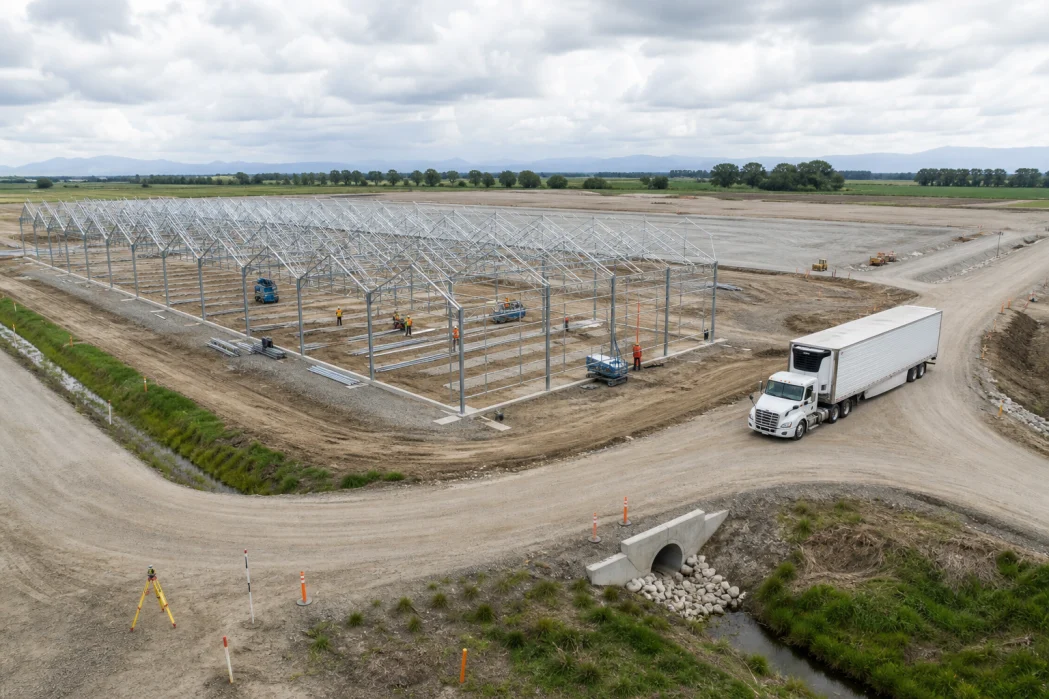
Commercial greenhouse site with access road, drainage swale, service yard and expansion area under due-diligence review
Cost guides/18-22 minutes/Updated: March 2025

Commercial Greenhouse Site Selection Guide: Land, Climate, Logistics and Due Diligence

Compare greenhouse sites before committing to land. Use a practical framework for parcel fit, climate exposure, logistics, due diligence and supplier-ready design inputs.

  • A low-cost parcel can become an expensive greenhouse site if usable geometry, drainage, access, legal certainty or climate exposure are weak. Screen candidate sites through four gates before committing to land: parcel fit, climate exposure, logistics and evidence-backed due diligence. Separate deal-breakers from remediable constraints before asking suppliers to quote. Convert validated site information into a supplier-ready design-input pack so quotations share the same assumptions and exclusions.
Read the guide
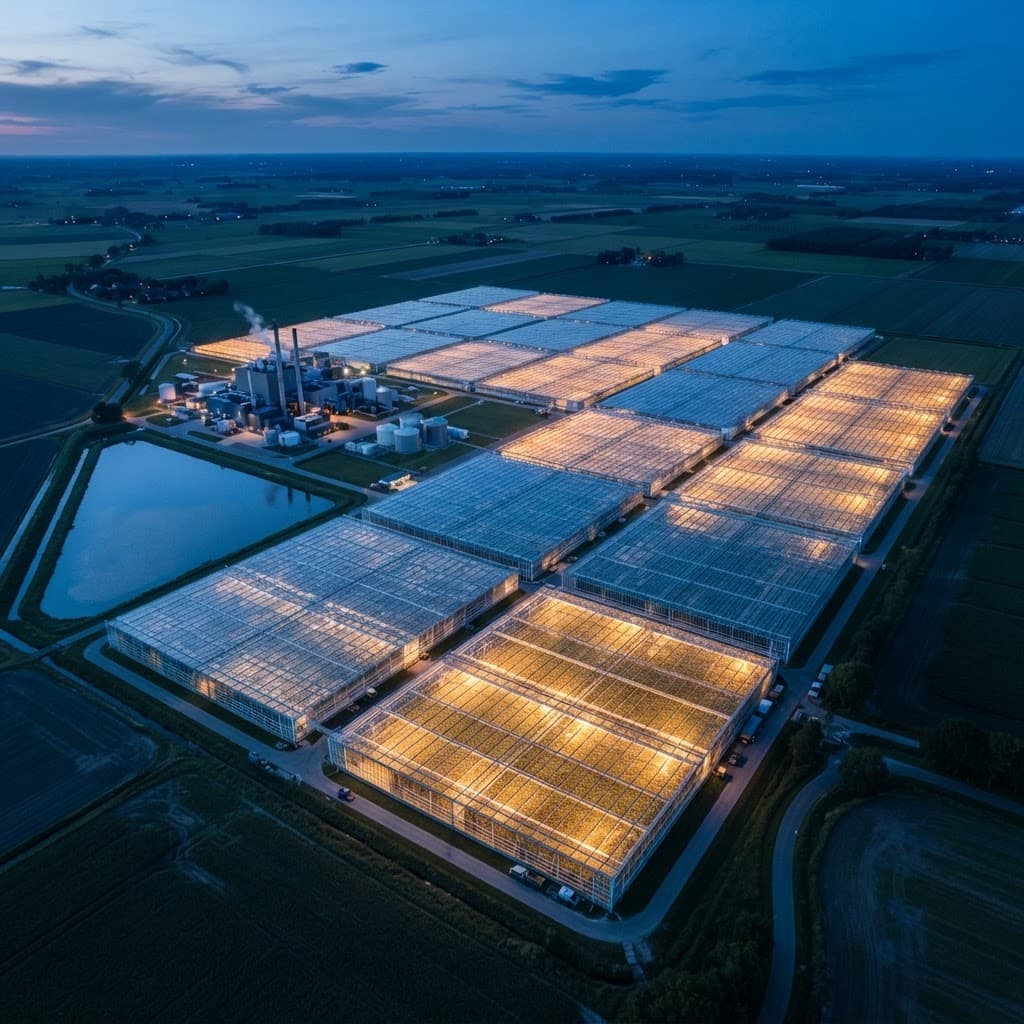
Commercial greenhouse project cost planning with greenhouse blocks, service roads and water infrastructure
Cost guides/14 min read/Updated July 2026

Commercial Greenhouse Cost: What Investors Should Budget

Plan commercial greenhouse cost with CAPEX ranges, OPEX drivers, hidden owner-scope items, quote normalization and contingency rules for investors.

  • A useful commercial greenhouse cost estimate separates greenhouse package, crop systems, infrastructure, owner scope and working capital.
  • Cost per square metre is only a first filter; investors should normalize costs against production target, crop risk and operating model.
  • Civil works, utilities, water treatment, controls integration, logistics and contingency are the budget lines most often missed in early quotes.
  • Quote comparison is unreliable until inclusions, exclusions, design criteria and owner responsibilities are levelled across bidders.
  • A realistic budget should include sensitivity ranges instead of one attractive number, especially for energy, labour and site-preparation assumptions.
Read the guide
Commercial Greenhouse Operations Readiness Guide: Labour, SOPs and Ramp-Up Risk
Investment guides/12-15 minutes/Updated: March 2025

Commercial Greenhouse Operations Readiness Guide: Labour, SOPs and Ramp-Up Risk

A practical owner-side guide to greenhouse labour planning, SOP ownership, grower capability, commissioning handover and 90-day ramp-up governance.

  • Commercial greenhouse operations readiness tests whether people, procedures, governance, supplier handover and operating data can support the selected crop and system complexity.
  • Automation changes labour demand from manual adjustment toward alarm ownership, sensor verification, maintenance coordination and climate-data interpretation.
  • Greenhouse labour planning must test routine staffing, peak-task cover, absenteeism resilience, role-based training and commissioning-period supplier support.
  • Greenhouse SOP planning should assign named owners for climate, fertigation, hygiene, crop work, maintenance, alarms, incidents and escalation.
  • Commissioning is not operational handover until the owner has controls access, point lists, alarm logic, training evidence, acceptance criteria and defect-resolution boundaries.
  • Supplier quotations should be normalized for hidden operating-readiness scope before buyers compare headline equipment prices.
Read the guide
Greenhouse investment planning with first phase greenhouse and prepared expansion land
Investment guides/15 min read/Updated July 2026

Greenhouse Investment Guide: From Feasibility to First Harvest

Evaluate greenhouse investment with market fit, feasibility, CAPEX/OPEX, bankability, ramp-up risk, payback sensitivity and procurement readiness.

  • A greenhouse investment should start with market access and operating capability before technology selection.
  • Financeable models show sensitivity ranges for yield, price, energy, labour and ramp-up, not one attractive payback number.
  • Bankability depends on buyer evidence, site assumptions, grower capability, risk controls and procurement discipline.
  • Operational ramp-up can decide returns more than the headline greenhouse specification.
  • The best investment sequence is feasibility, budget framework, technology direction, specification, tender and controlled execution.
Read the guide
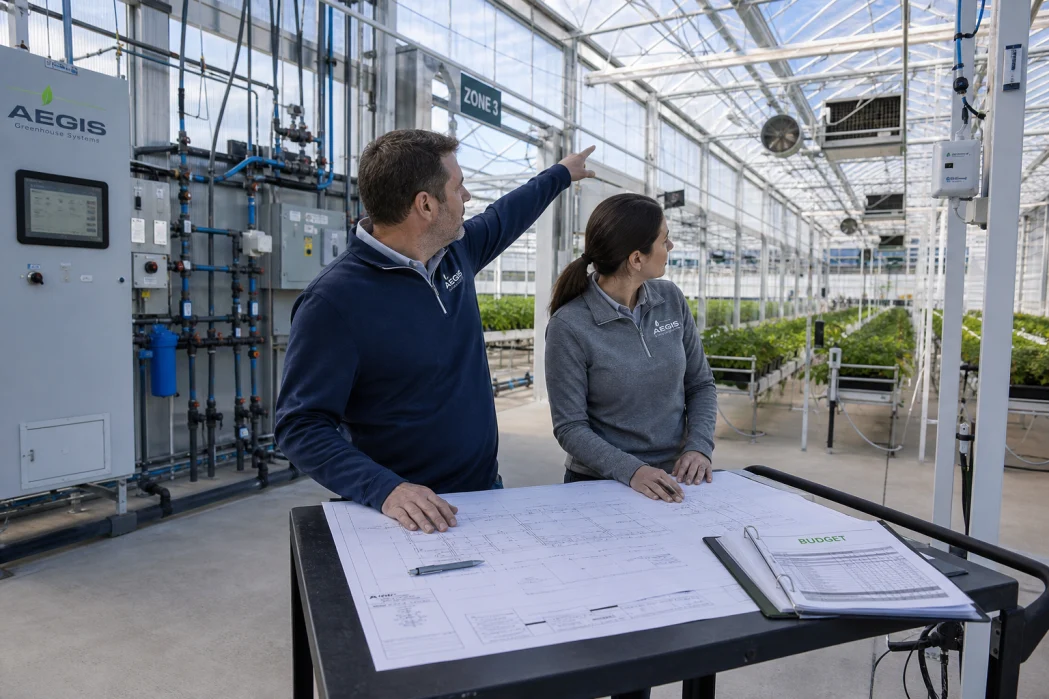
Project team reviewing a commercial greenhouse budget and infrastructure scope inside a modern greenhouse.
Investment guides/10-12 minutes/Updated for current commercial greenhouse planning considerations

Commercial Greenhouse Project Budget: What Investors and Growers Should Budget For

An evergreen investment guide explaining how to structure a commercial greenhouse project budget, evaluate capex categories, and define planning assumptions before requesting supplier quotes.

  • A commercial greenhouse project budget should be built from production requirements and site realities before supplier quoting starts.
  • A greenhouse capex breakdown must separate structure, systems, infrastructure, and site-development costs to avoid under-budgeting.
  • Crop type, greenhouse type, climate, and site conditions materially change budget priorities and total capital needs.
  • Pre-quote assumptions are essential for making supplier proposals comparable and decision-useful.
  • A project-specific budget framework review can reduce scope gaps before procurement moves forward.
Read the guide
Commercial Greenhouse Utility Planning Guide: Power, Fuel, Water, Drainage and Backup Capacity
Technology guides/14 minutes/Updated: February 2025

Commercial Greenhouse Utility Planning Guide: Power, Fuel, Water, Drainage and Backup Capacity

A procurement-stage utility-readiness guide covering commercial greenhouse electrical demand, heating fuel, water storage, drainage, backup capacity, supplier interfaces and RFQ scope gaps.

  • Start utility planning from crop programme, operating season and technology direction; separate connected, diversified and critical electrical loads; assess water chemistry separately from hydraulic capacity; route roof runoff, floor washdown and nutrient-bearing discharge as different streams; define backup autonomy before selecting generator and fuel-storage scope; normalize supplier quotations at every utility handover point.
Read the guide
Greenhouse Water Quality Requirements: What Commercial Projects Should Test Before Design
Technology guides/9 minutes/Updated

Greenhouse Water Quality Requirements: What Commercial Projects Should Test Before Design

A commercial planning resource explaining what water quality parameters greenhouse projects should test before design and how results influence crop fit, irrigation strategy, treatment scope, and budget risk.

  • Water quality should be evaluated before crop, irrigation, and treatment decisions are finalized.
  • A single water sample is rarely enough for commercial planning when seasonal or source variability is possible.
  • Test results affect more than treatment choice; they can change crop suitability, fertigation strategy, maintenance burden, and budget assumptions.
  • Commercial greenhouse water testing should connect lab data to design criteria, supplier coordination, and operating risk.
  • Project teams should review water results early enough to avoid under-scoped infrastructure and late redesign costs.
Read the guide
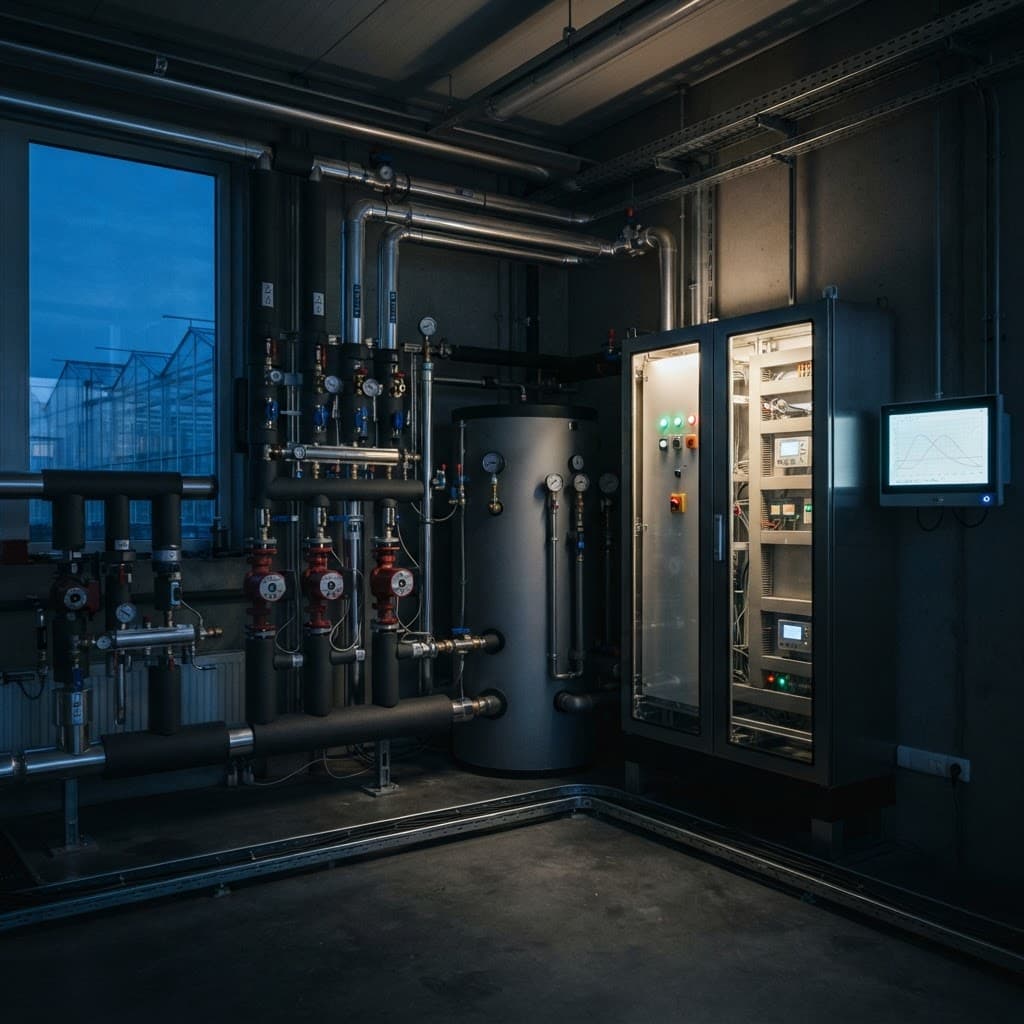
Greenhouse technical room with climate control manifolds, pumps and electrical cabinets
Technology guides/15 min read/Updated July 2026

Greenhouse Technology Comparison: Choosing the Right System

Compare greenhouse technology by crop, climate, glazing, structure, climate control, automation, operating risk and investment fit.

  • Greenhouse technology should follow crop, climate, labour model and market window, not supplier preference.
  • Glazing is a long-life decision that affects light, heat loss, maintenance, crop quality and financing assumptions.
  • Climate control choices should be judged by crop risk and seasonal continuity, not by maximum technical sophistication.
  • Automation ROI depends on labour availability, operating discipline and data use, not just equipment capability.
  • The right system is the lowest-risk fit for the production goal, not automatically the highest-specification greenhouse.
Read the guide
Greenhouse crop selection across tomatoes, strawberries, leafy greens and nursery production
Crop guides/14 min read/Updated July 2026

Greenhouse Crop Selection Guide: Matching Crop to Market and Climate

Choose greenhouse crops by market window, climate, water, labour, technology package, yield ramp-up and investment risk.

  • Choose the market window before choosing the crop; production without buyer fit creates avoidable risk.
  • Crop choice dictates structure, climate systems, irrigation, labour model and cash-flow timing.
  • Water quality, labour availability and grower capability can eliminate otherwise attractive crop options.
  • High-value crops are not automatically better if the project cannot manage quality consistency and ramp-up.
  • The right crop is the one that fits local demand, climate response, operating capability and investment return together.
Read the guide
Greenhouse component samples and specification details for supplier procurement
Buying guides/16 min read/Updated July 2026

Greenhouse Buying Guide: How to Specify, Tender and Contract

Buy a commercial greenhouse with a performance specification, supplier shortlist, quote levelling, contract scope and acceptance criteria framework.

  • Do not ask suppliers for quotes until one written performance specification exists.
  • The lowest price is often the offer with the most missing scope unless quotes are levelled line by line.
  • Supplier selection should test engineering fit, scope clarity, delivery model, service capability and interface responsibility.
  • Contracts should link payments to inspection and acceptance milestones, not just calendar dates.
  • Every boundary between greenhouse, climate, irrigation, civil works and controls needs a named interface owner.
Read the guide

Turn this guide into a project-specific decision

Talk with Aegis about your crop, constraints and the decision you are trying to make, and we will help you narrow the right project path, cost logic and next planning step for your case.