Skip to content
AEGIS Greenhouse Systems

Technology guides / 15 min read / Aegis Project Engineering

Greenhouse Technology Comparison: Choosing the Right System

An engineering-led comparison of greenhouse structures, glazing, climate systems and automation choices by crop, climate and investment logic.

By Aegis Project Engineering

Published /Updated

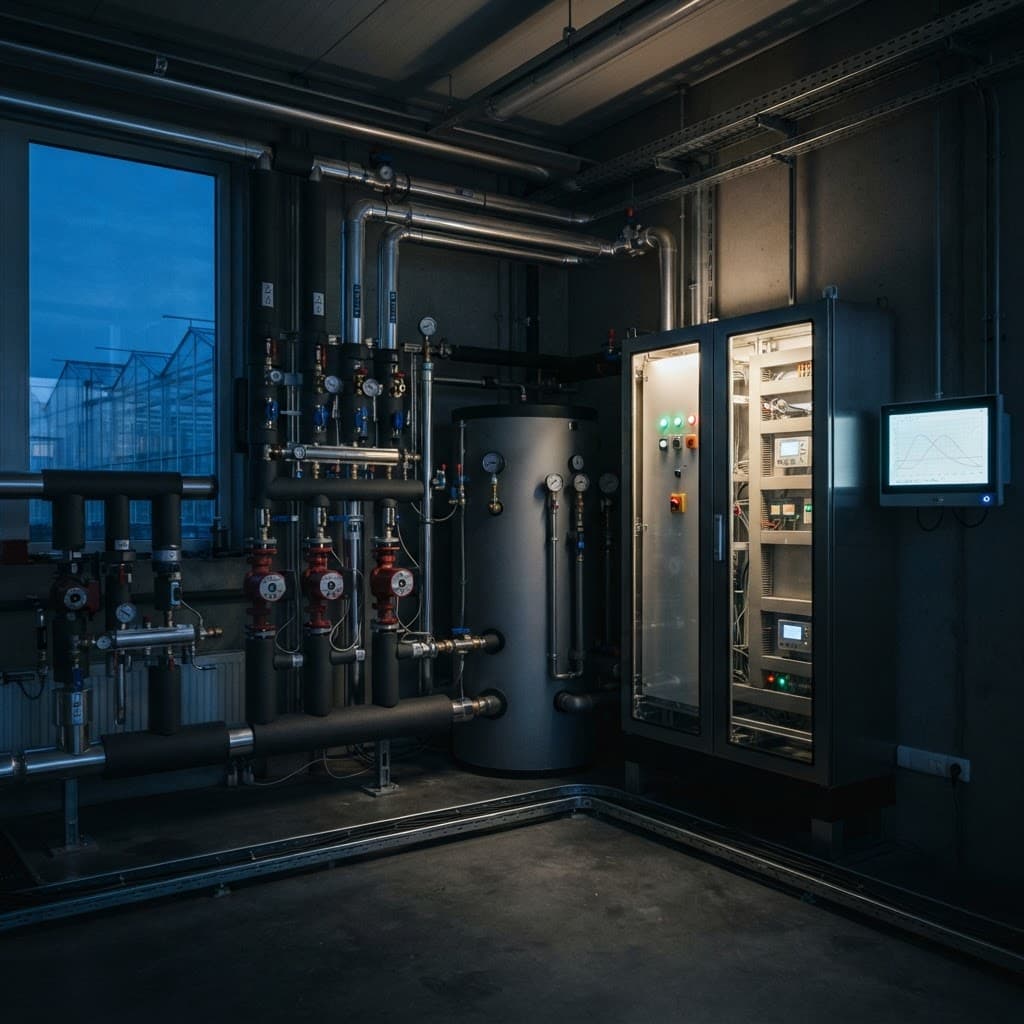
Greenhouse technical room with climate control manifolds, pumps and electrical cabinets

Key takeaways

  • Greenhouse technology should follow crop, climate, labour model and market window, not supplier preference.
  • Glazing is a long-life decision that affects light, heat loss, maintenance, crop quality and financing assumptions.
  • Climate control choices should be judged by crop risk and seasonal continuity, not by maximum technical sophistication.
  • Automation ROI depends on labour availability, operating discipline and data use, not just equipment capability.
  • The right system is the lowest-risk fit for the production goal, not automatically the highest-specification greenhouse.

Overview

Greenhouse technology comparison is not a contest between glass, film, polycarbonate, Venlo, multi span or semi-closed systems. The correct choice depends on what the facility must produce, where it operates, how much climate risk it must control and what return the capital must support.

This resource turns the old technology overview into a practical selection framework for investors and engineering teams comparing greenhouse options before specification and tender.

Technology follows climate and crop

A greenhouse concept that performs well in a cool light-limited region may be the wrong investment in a hot, dusty or humid climate. Start with crop requirements, outside weather, energy cost, labour availability and the target harvest window.

  • Light-limited climates put more value on transmission and insulation.
  • Hot climates put more pressure on cooling, shading, ventilation and filtration.
  • High-wire crops need gutter height, climate buffer and crop-support infrastructure.
  • Short-cycle leafy production often needs workflow and hygiene efficiency more than heavy structures.

Glazing comparison: glass, film and polycarbonate

Glazing affects light transmission, insulation, lifespan, cleaning, replacement cycles and the financing story. A cheaper cover may be correct for some crops and climates, while a higher-spec glasshouse may be necessary for year-round precision production.

Option Best fit Tradeoff
Glass High-value year-round crops where light and durability matter Higher CAPEX and engineering requirements
Film Cost-sensitive projects, seasonal production and some warm climates Shorter replacement cycle and lower durability
Polycarbonate Insulation-focused or impact-risk applications Lower light transmission than high-quality glass in many cases
Diffuse glass Light-limited crops needing better canopy distribution Premium must be justified by crop and climate model

Climate control levels

Passive, active and semi-closed climate concepts should be compared by risk reduction. The question is not whether a system is advanced, but whether it protects yield, quality and market continuity enough to justify the cost.

Climate concept Use when Avoid when
Passive ventilation Climate is mild and crop tolerance is high Season continuity or humidity control is critical
Active heating/cooling Crop value justifies tighter set-point control Energy or water assumptions are not viable
Semi-closed Hot periods, dust, pests or continuity risks threaten the model The project cannot operate the added complexity

Automation and controls decision framework

Automation should be specified around the labour market and management system the project will actually have. Over-automation without operating discipline adds complexity; under-automation in a tight labour market can cap production reliability.

  • Define which decisions the climate computer must support.
  • Specify sensor coverage and maintenance responsibility.
  • Decide whether automation reduces labour, improves consistency or both.
  • Budget training and operating routines, not only hardware.

Selection matrix

The best technology choice is the option with the strongest fit across crop, climate, operating capability and return profile. A higher-spec system is justified only when it reduces a material business risk or unlocks a market window that the cheaper system cannot serve.

Decision factor What to test Why it matters
Crop sensitivity Temperature, humidity, light and disease tolerance Defines climate-control intensity
Market window Need for year-round or seasonal continuity Determines whether downtime is acceptable
Energy and water Availability, cost and reliability Can make high-control systems uneconomic
Labour model Skill availability and wage pressure Shapes automation ROI

FAQ

Frequently asked questions

Is a glass greenhouse always better than film?+

No. Glass can be better for long-life, high-transmission, year-round crops, but film can be the better investment for cost-sensitive or seasonal production when climate and crop requirements allow it.

When is a semi-closed greenhouse worth it?+

It is worth evaluating when heat, dust, pests, humidity or seasonal shutdown risk would otherwise reduce yield or market continuity enough to hurt the business case.

How should greenhouse automation be justified?+

Automation should be justified by labour savings, production consistency, risk reduction and management capability. Hardware alone does not create value without operating routines.

What technology decision is hardest to change later?+

Structure, gutter height and glazing are difficult to change after construction. They should be specified carefully before tender.

Can Aegis compare supplier technologies?+

Yes. Aegis can help normalize technology assumptions, identify missing scope and compare system options against crop, climate and investment requirements.

Start Your Greenhouse Project With Aegis

Ask Aegis for a technology direction review before locking a supplier specification. We can compare greenhouse concepts against your crop, climate, operating model and investment case.