Skip to content
AEGIS Greenhouse Systems

Investment guides / 15 min read / Aegis Project Engineering

Greenhouse Investment Guide: From Feasibility to First Harvest

A practical investment framework for greenhouse projects, covering market fit, feasibility, ROI sensitivity, bankability, ramp-up and risk control.

By Aegis Project Engineering

Published /Updated

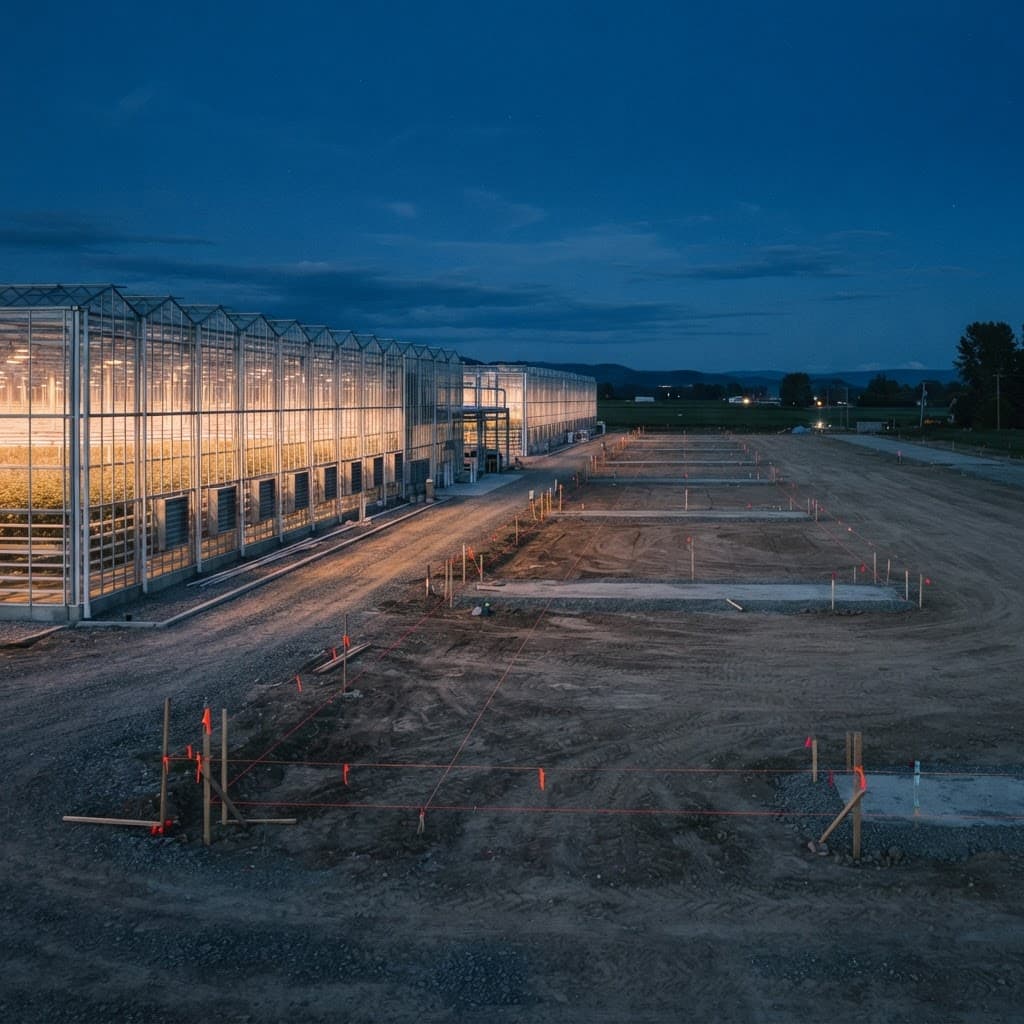
Greenhouse investment planning with first phase greenhouse and prepared expansion land

Key takeaways

  • A greenhouse investment should start with market access and operating capability before technology selection.
  • Financeable models show sensitivity ranges for yield, price, energy, labour and ramp-up, not one attractive payback number.
  • Bankability depends on buyer evidence, site assumptions, grower capability, risk controls and procurement discipline.
  • Operational ramp-up can decide returns more than the headline greenhouse specification.
  • The best investment sequence is feasibility, budget framework, technology direction, specification, tender and controlled execution.

Overview

A greenhouse investment is not just a construction project. It is a controlled-production business whose returns depend on market access, crop strategy, operating capability, energy exposure, technology fit and procurement discipline.

This guide upgrades the investment page into a feasibility and bankability framework for teams deciding whether a commercial greenhouse project deserves capital, how much risk remains, and what must be proven before procurement starts.

Start with market proof before greenhouse design

The most important investment question is not which greenhouse to buy. It is whether the target crop can be sold at the required quality, volume, price and delivery window. Technology should follow that commercial reality.

[Industry Pattern] Projects that start with a preferred structure often discover too late that their buyer, crop, energy cost or labour model cannot support the assumed return.

  • Target buyer and quality grade
  • Seasonal price window
  • Import substitution or premium local supply logic
  • Packhouse, cold chain and delivery requirements
  • Competitive supply and price volatility

Feasibility sequence for greenhouse investors

A professional feasibility process reduces uncertainty in stages. Each stage should either increase confidence or stop the project before expensive commitments are made.

Stage Decision question Output
Market screening Is there a profitable demand window? Crop and buyer shortlist
Site and climate review Can the site support the crop economically? Climate strategy and utility constraints
Technology direction What system level fits the risk and return? Structure, glazing and climate concept
Financial model What assumptions drive ROI? CAPEX, OPEX, sensitivity and payback ranges
Procurement readiness Can suppliers price comparable scope? Specification and tender plan

ROI and payback need sensitivity, not optimism

A credible greenhouse investment model should show what happens when yield is slower, price is lower, energy is higher, labour is tighter or ramp-up takes longer. The downside case is often more useful than the base case because it shows whether the project survives stress.

Use payback as a communication metric, not the only investment metric. Investors should also test cash conversion, debt service coverage, working capital needs and the timing of operational maturity.

Bankability checklist

Lenders and boards usually care less about the greenhouse brand and more about whether the project team can control execution and operating risk.

  • Buyer evidence or offtake pathway
  • Experienced grower or operating partner
  • Climate and utility assumptions documented
  • CAPEX and OPEX sensitivity tested
  • Procurement scope normalized
  • Permitting and site risks identified
  • Ramp-up plan and working capital included

Decision framework: should the project proceed?

A project should proceed to procurement only when market proof, site feasibility, technology direction, capital structure and execution capability are aligned. If one of those pillars is weak, the next step should be more evidence, not supplier quoting.

Pillar Proceed signal Pause signal
Market Buyer path and price logic are credible Crop chosen before buyer evidence
Site Utilities and climate response are viable Energy or water assumptions are unknown
Technology Specification follows crop and climate Technology selected by preference
Finance Sensitivity range is acceptable Only base-case payback works
Operations Grower capability is secured Operations will be solved after construction

FAQ

Frequently asked questions

Is greenhouse farming profitable?+

It can be profitable when market access, crop choice, technology fit, energy cost and operating capability align. Profitability should be tested through sensitivity ranges rather than a single payback number.

What is the biggest investment risk?+

Operational underperformance is often the biggest risk. A well-built greenhouse can still miss targets if grower capability, monitoring routines, labour planning and post-harvest handling are weak.

How long does greenhouse payback take?+

Payback depends on crop, market, CAPEX, energy, yield ramp-up and financing. A serious model should show optimistic, base and stressed payback scenarios instead of one universal period.

What should feasibility include?+

Feasibility should include market demand, crop strategy, site and climate constraints, technology direction, CAPEX/OPEX, sensitivity analysis, operating model, procurement plan and risk register.

When should investors engage Aegis?+

The best timing is before supplier quoting, when market, site, budget and technology assumptions can still be shaped into a bankable project framework.

Start Your Greenhouse Project With Aegis

Ask Aegis for an investment-stage feasibility review before committing to greenhouse procurement. We can help test market fit, budget structure, technology direction, sensitivity assumptions and execution risks.