Skip to content
AEGIS Greenhouse Systems

/

High-Altitude Vegetable Greenhouse Project Scenario for Cool-Season Production

A high-altitude reference planning scenario for cool-season vegetable production, covering site inputs, technical pathways, cost drivers, risk and supplier coordination.

Elevation and site climate profile

Planning range

Wind, snow and severe-weather exposure

Planning range

Available land and service-space needs

Planning range

Crop programme and market window

Planning range

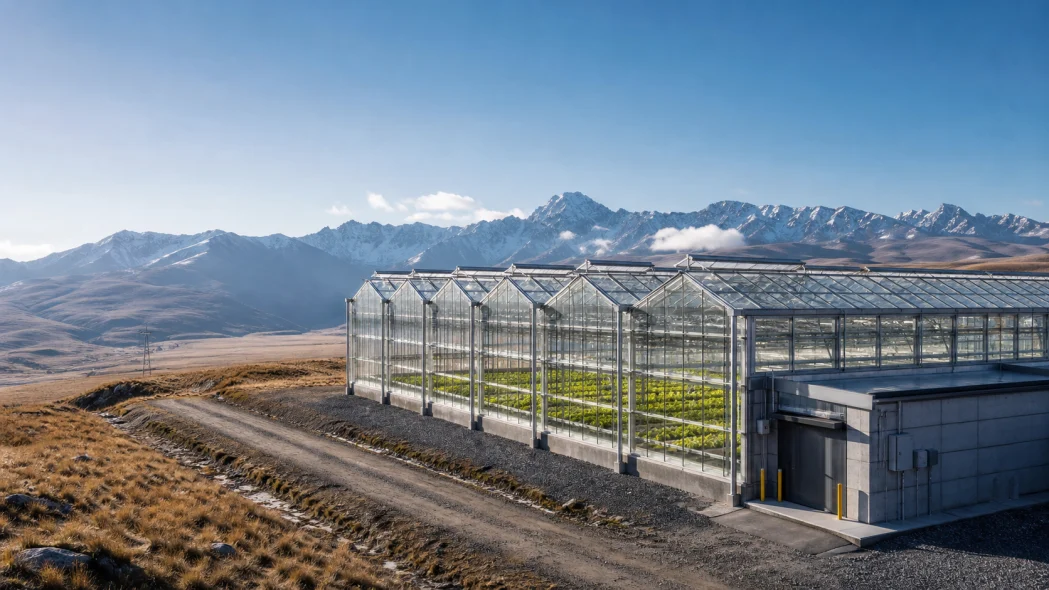
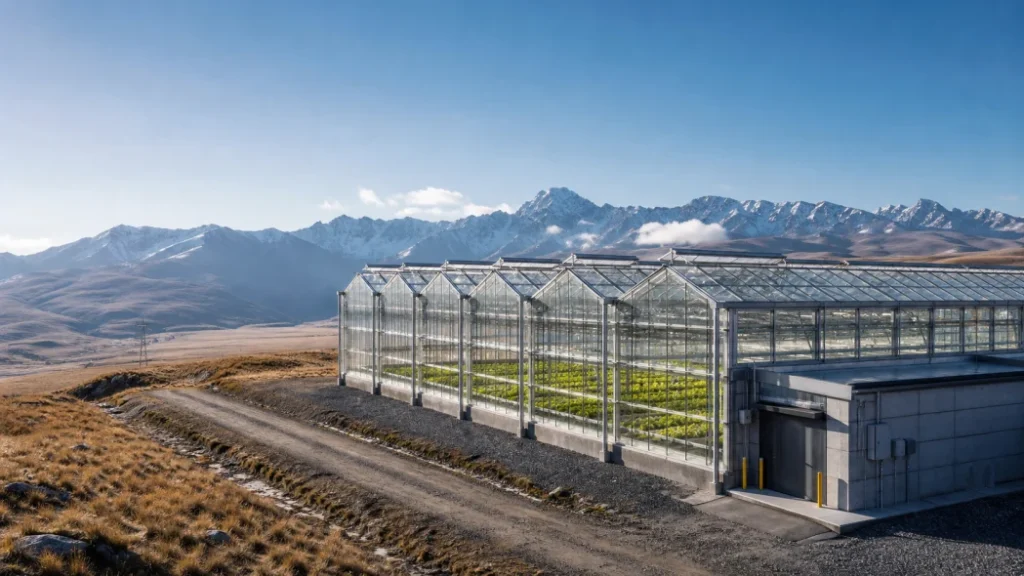
Illustrative multi-span commercial greenhouse for cool-season vegetables on a high-altitude site with mountain terrain and service infrastructure.

Confidentiality and scenario basis

This page is a confidentiality-protected reference planning scenario, not a named delivered client project or verified performance record. Final specifications require site data, responsible engineering review, supplier validation and applicable jurisdictional approvals.

Reference Scenario: A High-Altitude Greenhouse Project for Cool-Season Vegetables

Illustrative multi-span commercial greenhouse for cool-season vegetables on a high-altitude site with mountain terrain and service infrastructure.
Illustrative reference scenario: elevation, exposure, utilities and access conditions should be assessed before a greenhouse technical path is specified.

This page is a confidentiality-protected reference planning scenario, not a named delivered client project or verified performance record. Final specifications require site data, responsible engineering review, supplier validation and applicable jurisdictional approvals.

A high-altitude greenhouse project should begin with the conditions the operation must manage, rather than with a preselected structure or equipment package. The planning question is how elevation changes the brief for a cool-season vegetable greenhouse, from the site exposure and operating objective through to the information suppliers need to assess a viable technical path.

  • Site basis: location, elevation, local weather history, water source, energy availability and access conditions.
  • Production basis: target crop programme, market requirement, available area and intended operating window.
  • Commercial basis: budget boundary, procurement timing and the level of operational capability available on site.

Aegis supports consulting, project planning, technology selection support, supplier coordination and project-management assistance. The purpose is to turn these inputs into a clearer project brief and supplier-comparison basis; final engineering, compliance and supply obligations remain with the responsible parties.

Location and Climate Inputs That Set the Project Brief

Elevation establishes the starting context, but it does not provide a usable greenhouse design basis on its own. The project brief should combine exposure history, seasonal operating conditions, utility reliability and site access before technical criteria are issued.

Input Why it matters Decision affected Validation needed
Site location and elevation Sets the initial context for atmospheric conditions, solar angle and logistics. Planning assumptions and site comparison. Coordinates, elevation record and site survey.
Seasonal and extreme temperatures Shows the conditions across the intended production window. Climate-response criteria and operating assumptions. Local historical records, including observed extremes.
Diurnal temperature range Reveals how quickly conditions can change between day and night. Daily climate-management brief. Site or nearby weather records assessed for relevance.
Wind exposure and gust direction Topography and prevailing exposure can differ materially between elevated sites. Structural exposure basis, orientation and access planning. Local records, site observations and responsible-party review.
Snow, hail and precipitation history Severe-weather exposure affects the conditions the project must accommodate. Loading, drainage and continuity requirements. Weather history and site-specific engineering review.
Solar availability, shading, humidity and fog Light opportunity and moisture conditions must be assessed together. Crop-climate objectives and condensation-management criteria. Seasonal site observation and local climate information.
Water source, quality and seasonal reliability Supply limitations or unsuitable water can change the project brief. Water-treatment, storage and irrigation planning inputs. Water analysis, flow information and seasonal supply confirmation.
Grid power, heating fuel and backup availability Utility resilience determines whether the intended operating response is practical. Energy-path assumptions and continuity requirements. Utility data, fuel logistics review and site-service confirmation.
Road access, freight route and installation conditions Remote or constrained access can shape what can be delivered, staged and installed. Concept layout constraints and implementation planning inputs. Route assessment, site visit and local access confirmation.

These inputs should be collected as one site record rather than as isolated checks. Local records, a site survey and review by the responsible engineering and supply parties are required before final design criteria can be set.

Crop Programme and Production Objective

The crop programme determines which conditions the greenhouse must protect and when those conditions matter. For a cool-season vegetable greenhouse, the first decision is not a crop label alone; it is the required harvest window, product specification and production rhythm.

Leafy greens, brassicas, herbs and other cool-season vegetables can be assessed as candidate groups. Each creates a different operating brief: leafy crops may prioritise uniform succession and post-harvest handling, brassicas may require a different crop calendar and space allocation, and herbs may place greater emphasis on quality consistency and harvest frequency. No group is automatically suitable solely because a site is at elevation.

Crop Brief to Confirm

  • Crop and cultivar: Confirm the intended product and variety rather than planning around a broad crop category.
  • Market specification: Define buyer requirements for grade, pack format, shelf-life expectations and delivery timing.
  • Harvest sequence: Establish whether the objective is regular weekly supply, seasonal concentration or staggered crop blocks.
  • Climate priorities: Identify the crop conditions that require the closest control during establishment, finishing and harvest periods.
  • Disease-management approach: Align crop density, hygiene practices, handling flow and operating discipline with the planned programme.
  • Production method and labour model: Confirm growing method, crop handling steps, available skills and labour availability before the operating brief is fixed.

These inputs turn a broad cool-season vegetable objective into a usable production brief for high-altitude greenhouse planning. They also help distinguish a project designed for a specific market window from one that merely seeks protected production in cooler conditions.

Facility Configuration and Area-Planning Boundary

No numeric facility range is published for this high-altitude greenhouse project because available land alone does not establish a usable production footprint. A concept area becomes credible only when the crop programme, market volume, handling flow, water capacity, utility space, access route and operating model are aligned.

Early layout planning should separate production functions from the support areas that keep them operating. Treating the greenhouse footprint as the whole project can leave insufficient room for water infrastructure, safe movement, post-harvest handling or delivery staging.

Layout component Spatial purpose Input needed before concept sizing
Production area Accommodates the confirmed crop layout, working aisles and crop-handling flow. Crop programme, production method, target harvest pattern and operating practices.
Headhouse and staff support Provides entry, hygiene, storage and operational support space. Labour model, hygiene process, consumable storage and shift pattern.
Packhouse and dispatch Receives harvested product for sorting, packing, temporary holding and collection. Market specification, post-harvest process, dispatch frequency and vehicle access.
Water treatment and storage Allows treatment, storage and distribution equipment to be located outside the crop area. Water source, analysis, seasonal availability and irrigation operating plan.
Utilities and controls Reserves accessible space for electrical distribution, energy equipment and control infrastructure. Utility connection strategy, backup requirements and maintenance access.
Circulation and staging Maintains movement routes for people, inputs, harvest, service access and deliveries. Site boundaries, vehicle turning needs, freight handling and installation access.

To move from a land parcel to a concept layout, the project team should confirm the usable site boundary, crop and market objective, water and utility locations, handling requirements, access constraints and the intended phasing of the facility. These inputs establish a spatial brief that suppliers can interpret consistently.

Elevation Greenhouse Design: Structure, Envelope and Climate Systems

For an elevation greenhouse design, the structure, covering and climate equipment should be evaluated as one operating system. Wind and snow exposure influence the structural and roof brief; solar gain and day-to-night temperature movement influence ventilation, screening and heat-retention choices; humidity control depends on how air movement, heating and moisture removal work together.

Structure and Envelope

  • Structure and roof geometry: assess against the locally validated wind, snow, drainage and access conditions. Roof form, vent arrangement and drainage paths should be considered together so weather protection does not compromise ventilation or maintenance access.
  • Covering and seals: compare light transmission, heat retention, durability, condensation behaviour and the ability to limit uncontrolled air entry during exposed conditions.
  • Thermal screens: evaluate as a crop-climate tool that can support night-time heat retention and moisture management, provided the control approach accounts for condensation and air exchange.

Climate Response and Crop Protection

  • Ventilation and circulation: size the decision around solar periods, temperature swings, crop canopy conditions and the need to avoid stagnant, humid zones. Natural and mechanical approaches should be assessed against the actual exposure and operating capability.
  • Heating and dehumidification: define the required response together, rather than treating heat as the only cold-weather measure. The selected approach must maintain an appropriate crop environment while managing moisture when outside-air exchange is constrained.
  • Controls and monitoring: specify the sensors, alarms, operating logic and manual override expectations needed to coordinate vents, screens, heating, circulation and moisture-control equipment.

Water and Resilience Interfaces

  • Irrigation, fertigation and storage: base treatment, storage and distribution decisions on water analysis, seasonal supply reliability, crop method and the layout of production and service areas.
  • Backup-power interfaces: identify which climate, irrigation, monitoring and communications functions require continuity during an interruption, then align the electrical interface with the intended operating priorities.

This grouped review prevents a preselected greenhouse type from driving the brief. For broader option definitions before applying them to a specific site, see the commercial greenhouse technology comparison.

Energy and Operating Assumptions for Cool-Season Production

For a high-altitude greenhouse project, the energy decision is whether the proposed climate response can be maintained throughout the intended production window, including cold nights, rapid temperature changes and periods when site access or utility supply is constrained. The operating model should be tested against the confirmed crop calendar before equipment capacity or fuel arrangements are taken forward.

Night-time heat demand, daytime solar gain and sharp diurnal swings need to be considered together. A sunny period may reduce heating demand while creating a ventilation requirement; a sudden temperature fall can reverse that condition quickly. Wind-driven air leakage can further change the response required from heating and circulation systems. The relevant planning question is therefore not simply which heat source is available, but whether heat, electricity, controls and operating procedures can respond reliably to changing conditions.

Fuel availability and delivery access should be checked alongside grid quality, outage history, electrical capacity and the role expected of backup power. Backup scope should distinguish essential controls, irrigation and circulation functions from the wider climate-control load, then be validated against the crop programme and local operating constraints. This keeps high-altitude greenhouse planning focused on an achievable operating path rather than an unsupported energy estimate.

Information Needed for the Energy Review

  • Monthly and extreme night-temperature records, plus the expected daily temperature swing during the production period.
  • Target crop calendar, climate setpoints and any harvest periods that cannot tolerate interruption.
  • Available heating fuels, storage constraints, delivery route practicality and seasonal supply limitations.
  • Grid connection capacity, power-quality information, outage history and proposed backup arrangement.
  • Expected solar periods, shading constraints and the intended operating response during rapid daytime warming.
  • Staffing, monitoring and response capability outside normal working hours.

These inputs allow Aegis to support a climate and energy discussion with technology providers that is aligned to the intended cool-season vegetable greenhouse operation, while final equipment design and validation remain with the responsible suppliers and engineering parties.

Investment Drivers and Budget Boundary

For a high-altitude greenhouse project, the investment boundary is set by the scope suppliers are asked to price. A concept cost discussion is useful only when the same site assumptions, utility connections, logistics requirements and excluded works are visible across each proposal.

Cost driver What changes the priced scope Budget-planning question
Structural exposure Local wind, snow, hail, drainage and anchoring requirements Which design criteria must be included rather than treated as an allowance?
Envelope and climate equipment Covering specification, screening, ventilation, heating, circulation and control scope What level of crop-climate response is required during the intended production window?
Utilities and water Power connection, heating-fuel infrastructure, backup provision, treatment, storage and distribution Which upstream services are available on site, and which must be added to the project scope?
Civil works and handling space Earthworks, foundations, drainage, internal roads, headhouse and packhouse requirements Which non-greenhouse works are necessary for an operable facility?
Remote logistics and installation Freight routing, unloading, storage, access constraints, local labour and installation support What delivery and site conditions must suppliers include in their commercial assumptions?
Contingency boundary Unresolved site conditions, utility upgrades, scope gaps and timing dependencies Which items need validation before a quotation can become a dependable project budget?

No budget range is published for this scenario because the location, area, crop programme, utility condition, civil scope and freight route have not been defined. Publishing a number before those inputs are aligned would make unlike scopes appear comparable. For broader guidance on commercial greenhouse cost categories, see commercial greenhouse cost planning.

Technology-Path Selection Framework

For high-altitude greenhouse planning, compare technical paths against the combined operating brief rather than selecting equipment in isolation. The framework below turns the buyer’s constraints into consistent questions for each supplier; see the commercial greenhouse technology comparison for broader option education.

Decision factor Options to evaluate High-altitude implication Supplier-brief requirement
Crop objective Production method, climate-control priority, harvest-window flexibility The chosen crop programme determines which temperature and humidity conditions require the greatest protection. State crop group, production method, market window and required handling profile.
Wind and snow exposure Structural concept, roof form, vent arrangement and drainage approach Exposure can change the design basis and the practicality of moving components. Require stated loading assumptions, design responsibility, exclusions and validation route.
Temperature swings Screening, heating response, ventilation logic and air movement strategy A path suited to daytime solar conditions may not protect the crop through colder night periods. Ask suppliers to explain the control sequence assumed for the intended operating window.
Solar gain Envelope choice, shading or screening approach, ventilation capacity and controls Useful daytime gain can coexist with overheating and condensation-management demands. Provide site shading information and require the solar-management assumptions to be identified.
Utilities and fuel Heating source, electrical resilience, backup arrangement and controls architecture Intermittent power or difficult fuel logistics can rule out otherwise suitable concepts. Supply available capacity, reliability constraints, fuel access and backup expectations.
Operating capability Automation level, monitoring depth, maintenance needs and operator intervention Remote access and limited specialist support favour a path the operating team can sustain. Define staffing, maintenance capability, remote-support expectations and training scope.
Budget boundary Phased build, essential resilience measures and optional upgrades Reducing initial scope can transfer cost or operating exposure into later stages. Separate base scope, options, exclusions and future-expansion allowances.
Expansion and lead time Modular layout, utility allowances, procurement sequence and delivery strategy Access constraints and seasonal site conditions can affect when equipment can be delivered and installed. Confirm expansion intent, access limitations, target procurement date and required decision milestones.

The preferred elevation greenhouse design is the option that satisfies these linked requirements with clearly stated assumptions. It should be compared on the same supplier-brief basis, not on headline equipment lists or isolated specifications.

High-Altitude Greenhouse Project Risk Matrix

Before award, the project team should convert each material exposure into a named validation action and accountable owner. This keeps supplier comparisons focused on resolved assumptions rather than hidden scope gaps.

Risk Potential impact Early planning response Responsible party
Wind exposure and gust loading Structure, vents, cladding and access provisions may be scoped against an unsuitable site basis. Confirm site wind information and require structural assumptions, exclusions and design responsibility to be stated in each proposal. Project sponsor, responsible engineering parties and structure suppliers
Snow, hail or severe weather Roof loading, drainage, covering durability and operational access may be inadequately addressed. Review local weather history and agree the conditions that suppliers must allow for before proposals are compared. Project sponsor, responsible engineering parties and shortlisted suppliers
Large diurnal temperature swings Crop conditions can move outside the intended operating window, with condensation and overheating periods requiring attention. Set crop-climate priorities and ask suppliers to explain the control response and its operating dependencies. Grower or operations lead, climate-system suppliers and project sponsor
Heating fuel, grid quality or backup limitations The planned operating window may depend on utilities that are unavailable, unreliable or difficult to replenish. Document power quality, fuel supply, delivery constraints and backup expectations before selecting an operating path. Project sponsor, utility contacts and technical suppliers
Water quality or seasonal availability Irrigation consistency, treatment requirements and crop-health controls may be compromised. Obtain water analysis and source-reliability information; define treatment and storage responsibilities in the project brief. Project sponsor, irrigation specialist and water-treatment supplier
Remote-site access and logistics Freight, unloading, storage, installation sequencing and local labour constraints can disrupt delivery planning. Map the route, staging area, lifting needs and site-access limits, then require suppliers to identify logistics exclusions. Project sponsor, logistics providers and suppliers
Supplier interface gaps Unpriced works, conflicting responsibilities and commissioning delays can emerge after appointment. Maintain an interface register covering each workstream and record who supplies, installs, connects, tests and accepts it. Project sponsor, Aegis coordination support and all relevant suppliers
Crop programme misaligned with market or operations The selected production approach may not fit the harvest window, handling requirement, labour plan or buyer specification. Confirm crop, cultivar, production method, market specification and post-harvest process before the scope is released. Project sponsor, grower or operations lead and commercial team

Aegis can support coordination of the risk register and supplier clarifications. Responsible engineering parties, suppliers, utilities and the project sponsor retain their applicable design, compliance, delivery and approval responsibilities.

Supplier Scope and Procurement Coordination

Comparable proposals depend on a shared scope sheet, interface register and acceptance definition. Each bidder should identify what is included, what is excluded and which party supplies the information, connection or work needed for its package to function.

Workstream Scope to define Interface risk Clarification required before award
Structure Frame, foundations boundary, roof loading basis, gutters, vents and fixing responsibilities. Unclear responsibility between structural supplier and civil contractor. Confirm design deliverables, foundation inputs, installation scope and exclusions.
Envelope and screens Cladding, sealing, doors, screens, drainage details and replacement items. Gaps at roof, vent, door and screen interfaces can affect performance and maintenance. List materials, interface details, spares and installer responsibilities.
Climate systems Heating, ventilation, circulation, dehumidification equipment, distribution and control points. Equipment capacities may be quoted without the required distribution, controls or connections. Define supplied equipment, installation limits, commissioning inputs and operating handover documents.
Irrigation and water treatment Source-water boundary, treatment, storage, fertigation, filtration, pipework and drainage. Water-treatment assumptions may differ from the irrigation supplier’s requirements. Confirm water-analysis basis, treatment responsibility, tank scope and final connection points.
Electrical and backup power Incoming supply point, distribution, panels, cabling, generator or backup interfaces and earthing. Controls and mechanical packages may rely on electrical works outside their quotations. Identify load data, electrical design responsibility, backup operating priorities and testing scope.
Civil works and site services Earthworks, drainage, roads, foundations, trenches, utility routes and staging areas. Late civil changes can prevent delivery, installation or system connection. Issue site levels, service routes, tolerances and handover conditions for each work area.
Packhouse and handling Building boundary, cold-chain interfaces, wash and pack equipment, drainage and workflow utilities. Production and post-harvest packages may leave service connections unassigned. Define handover points, utility demands, floor-drainage needs and responsibility for integration.
Controls and data systems Sensor schedule, control architecture, remote access, alarms, data ownership and network requirements. Disconnected control packages can limit coordinated operation and fault diagnosis. Confirm protocol compatibility, network provision, user access, training and support boundaries.
Commissioning and acceptance Installation checks, functional testing, documentation, operator training and defect-closeout process. Suppliers may treat delivery as completion while the project requires integrated operation. Set acceptance criteria, test responsibilities, records, training deliverables and closeout timeline.
Warranties and exclusions Warranty periods, response process, consumables, freight, local labour, permits and excluded works. Commercial comparison is distorted when exclusions are not stated consistently. Require a priced exclusions list, warranty terms, service contacts and responsibility matrix.

Aegis can support consulting, planning, technology selection, supplier coordination and project-management assistance so scope questions are aligned before proposals are compared. Final engineering, regulatory compliance, manufacturing, installation performance and supplier deliverables remain the responsibility of the relevant qualified engineering, supplier and jurisdictional parties.

Turn this scenario into your own project plan

Send your location, available area, target crop and budget range. We will map the likely technology path, supplier scope, risks and next procurement questions.