The short answer: budget CO2 only when the greenhouse can keep and use it
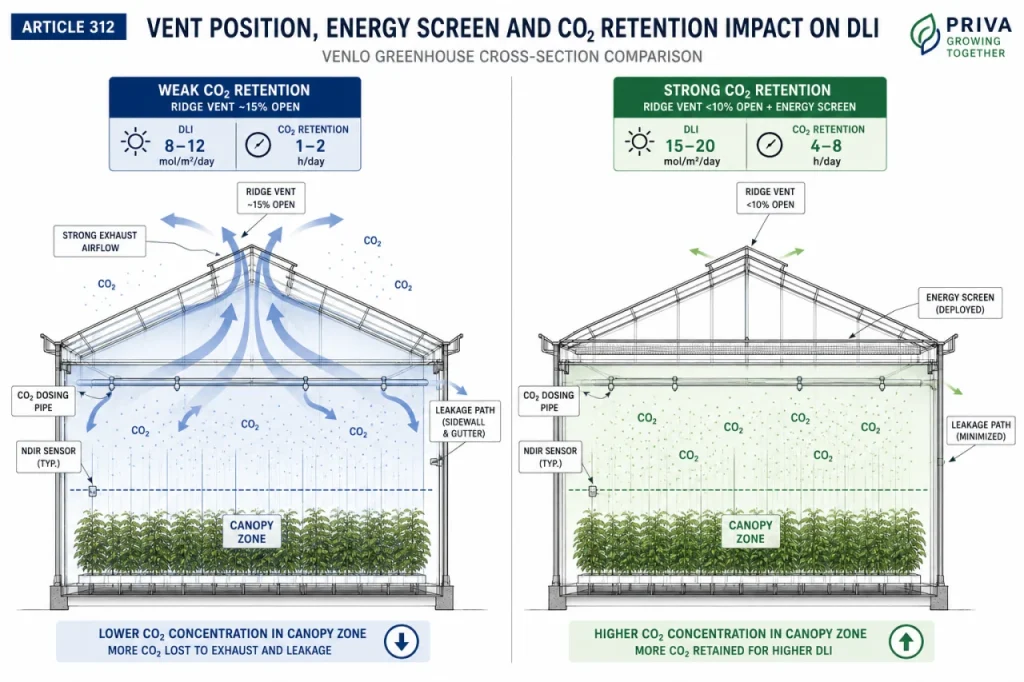
For early planning, CO2 enrichment is not a default line item. It belongs in the first budget only when a commercial greenhouse can hold a useful enrichment level for enough productive hours that the crop can actually respond. In practical planning terms, a 700-1,000 ppm target is only meaningful if the crop sees that range inside a reasonably retained environment rather than losing it quickly through vent opening or leakage. This section uses reference-scenario guidance for concept budgeting, not a site-specific design or verified project result.
| Budget path | What it means | When it fits |
|---|---|---|
| Include now | Carry first-budget allowance for the main CO2 enrichment package and core control integration. | Best fit where crop light is strong, venting periods are limited, leakage is relatively controlled, and the operating team can manage setpoints, sensing and daily follow-through. |
| Phased provision | Protect future CO2 readiness in the concept, but delay full investment until feasibility is clearer. | Usually the strongest middle path when the crop case looks promising but vent losses, climate pattern, or operational discipline are still uncertain. |
| Exclude | Leave CO2 out of first-tender budget scope and spend attention elsewhere. | Makes sense when frequent vent opening, high infiltration, low crop light, or weak monitoring discipline would make enrichment hard to retain or use well. |
The decision is controlled less by the headline ppm target and more by four linked realities: how often vents open, how much air leaks through the envelope, whether the crop has enough light to use added CO2, and whether the operation can manage climate setpoints consistently. If those conditions are weak, adding CO2 too early can make the budget look more advanced without improving the actual production concept. Use commercial greenhouse utility planning when you need the wider comparison criteria behind this point.